Architecture · LikeC4
AOA Toolkit
Runs an agent against real tasks mined from a repository, then scores retrieval locality, edit locality, invariant discoverability, and mutation surface
The whole picture
System landscape
The system in context, then opened up into its containers.
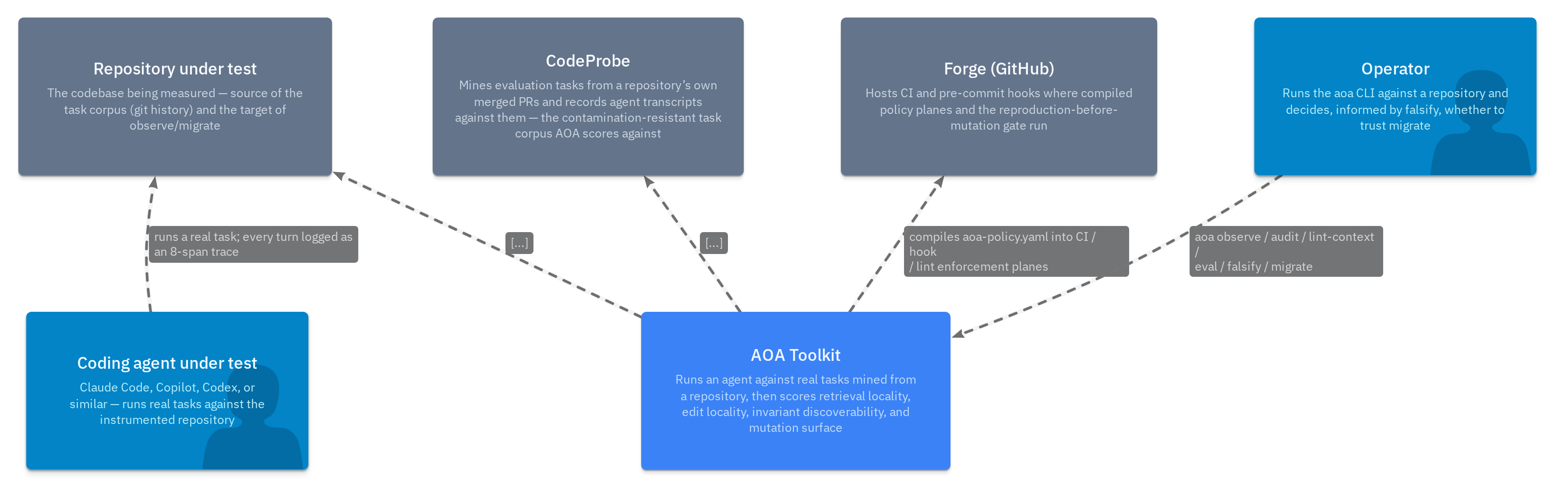
AOA Toolkit — system landscape
index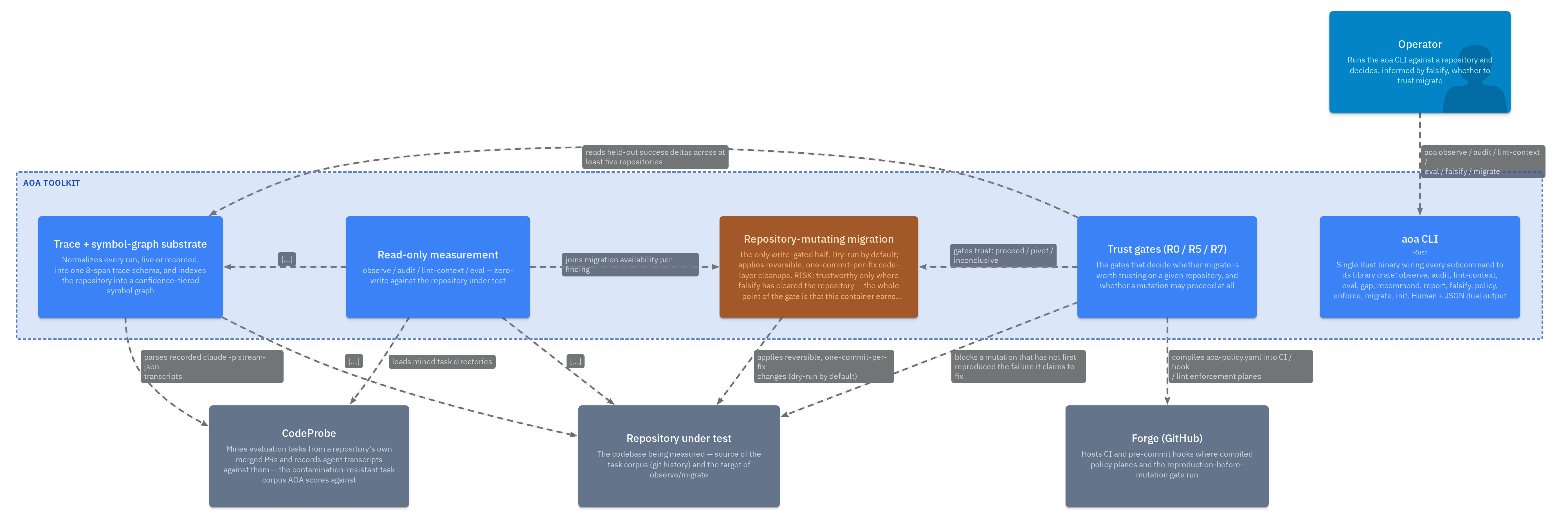
AOA Toolkit — containers (read-only vs write-gated)
aoaSystemRuns an agent against real tasks mined from a repository, then scores retrieval locality, edit locality, invariant discoverability, and mutation surface
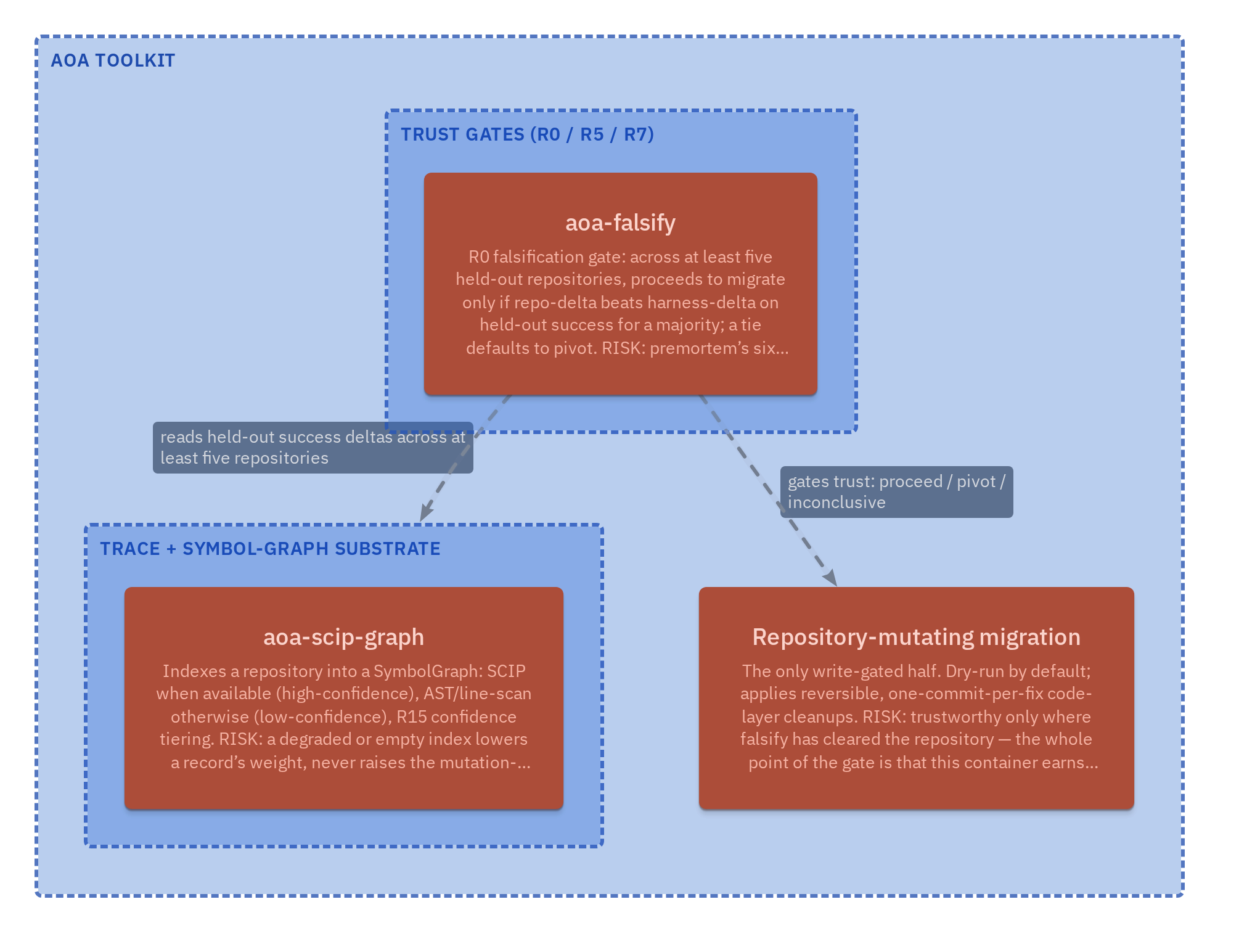
Risks & open questions
risksInside each box
Containers & components
Each part decomposed into the components that implement it. Every box links to its source in the interactive explorer.
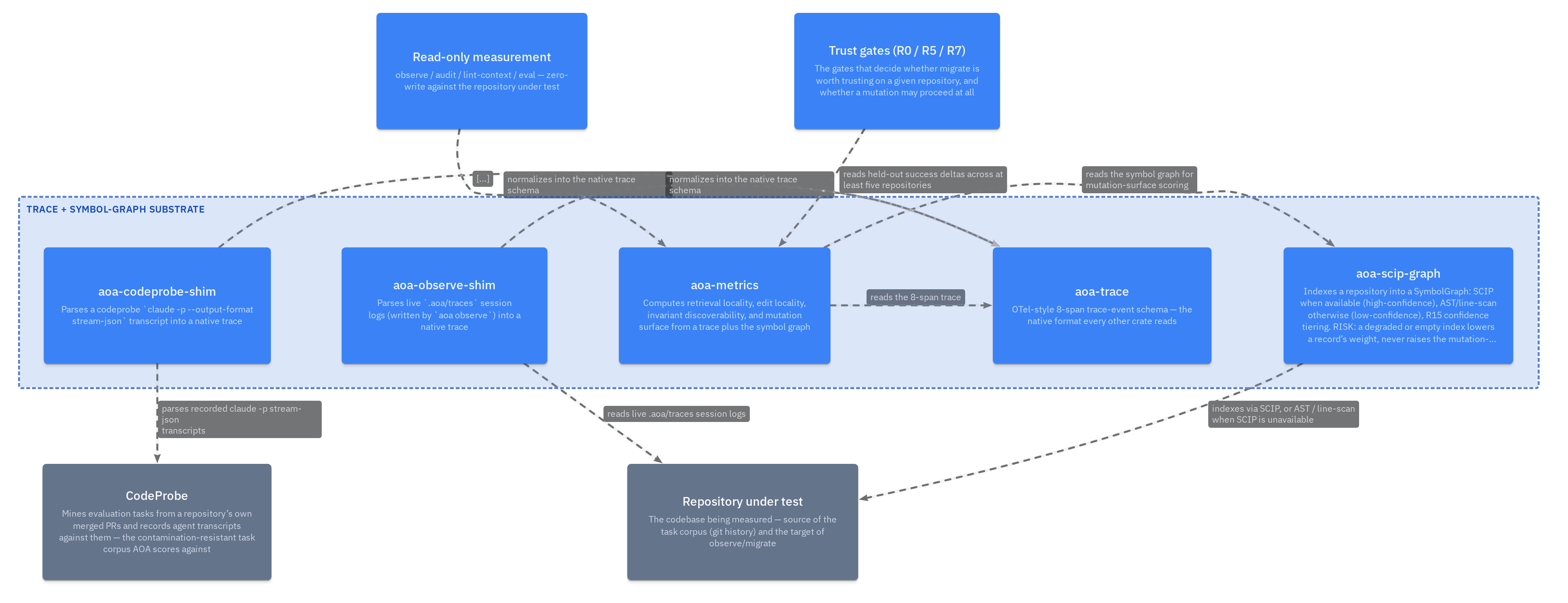
Trace + symbol-graph substrate — components
substrateContainerNormalizes every run, live or recorded, into one 8-span trace schema, and indexes the repository into a confidence-tiered symbol graph
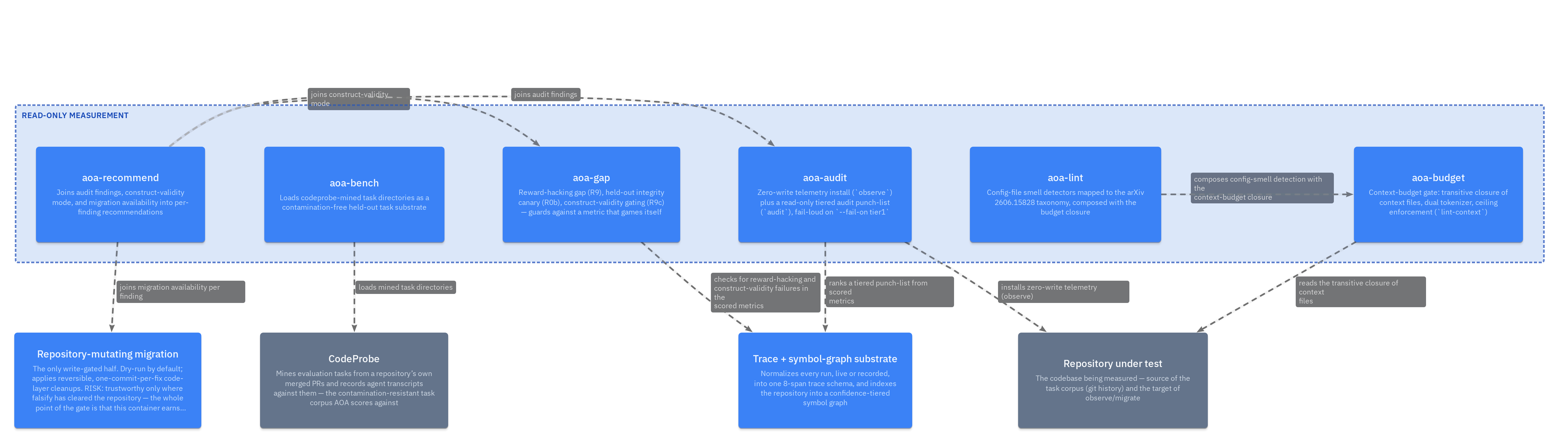
Read-only measurement — components
measureContainerobserve / audit / lint-context / eval — zero-write against the repository under test
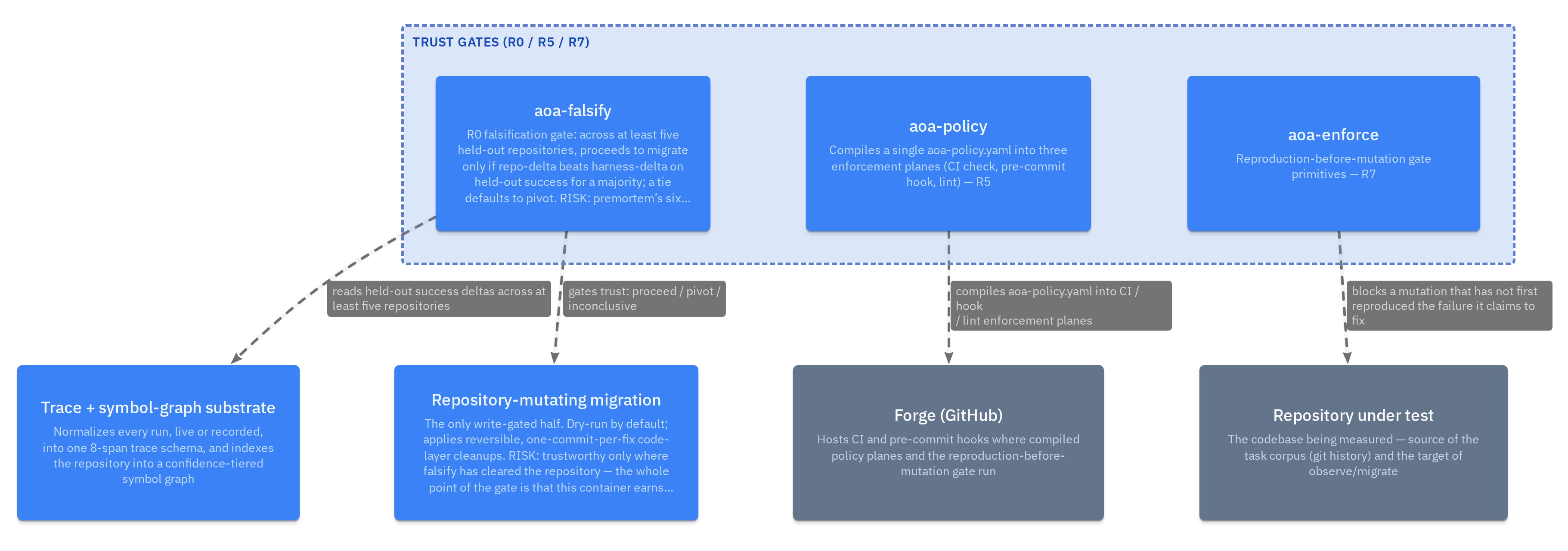
Trust gates (R0 / R5 / R7) — components
gatesContainerThe gates that decide whether migrate is worth trusting on a given repository, and whether a mutation may proceed at all
How it runs
Walkthrough flows
Dynamic views — the narrative spine of the system, step by step.
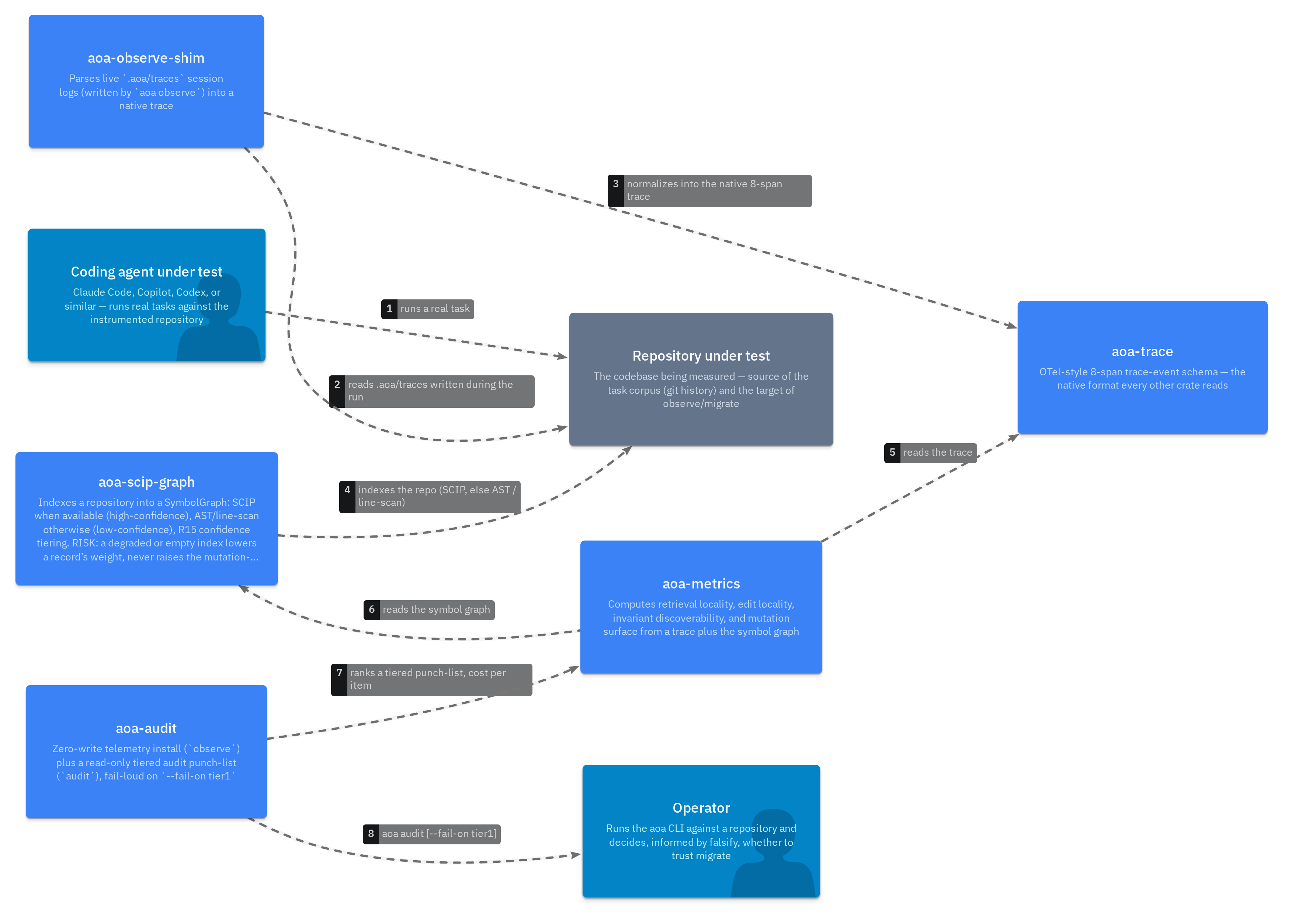
Walkthrough — observe + audit (zero-write)
auditFlowaoa observe installs telemetry; nothing beyond an ignored .aoa/ dir is visible to the agent. aoa audit is the read-only report.
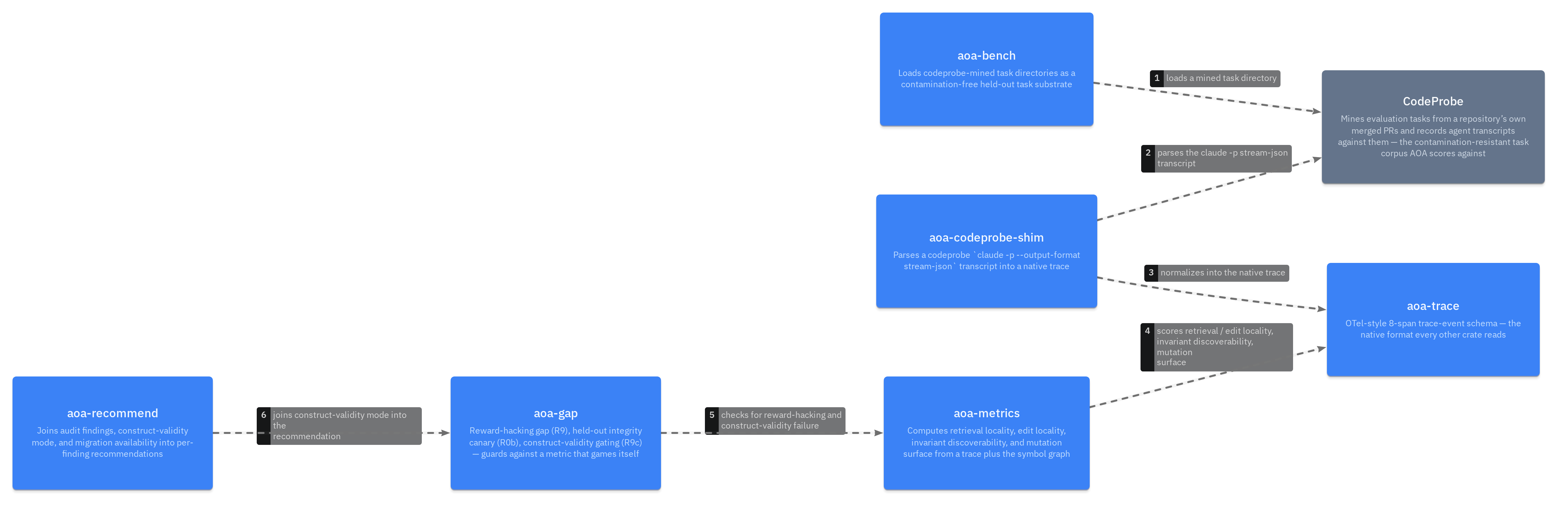
Walkthrough — eval run against a codeprobe-mined task
evalFlowaoa eval run --codeprobe-run <path> --tasks <path> turns a recorded transcript into per-task metrics.
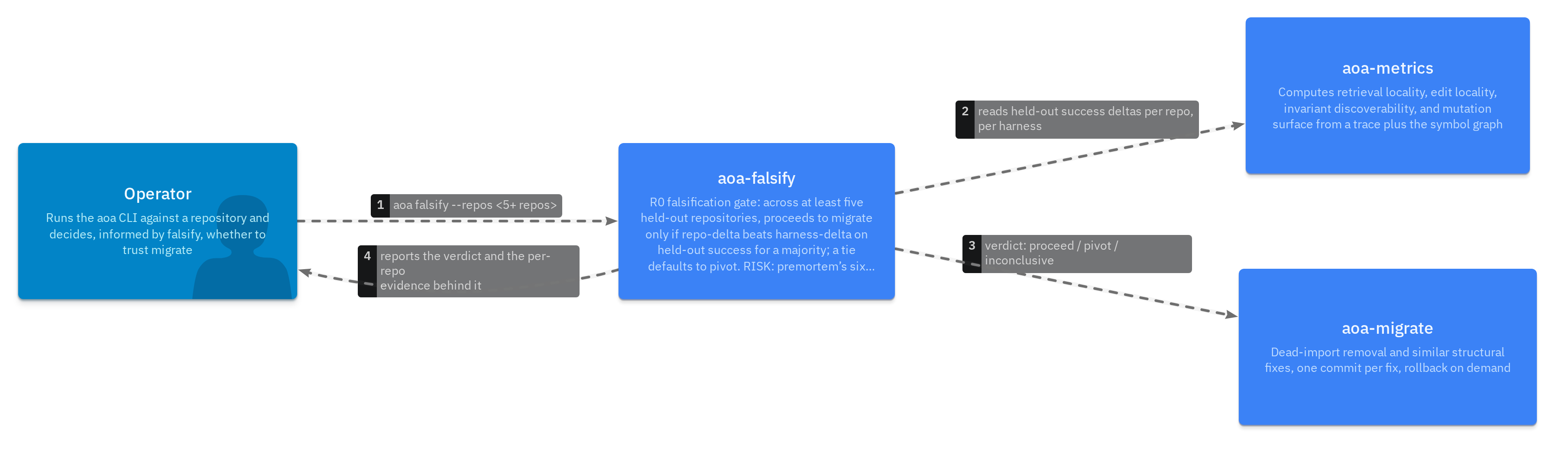
Walkthrough — falsify: the deciding experiment
falsifyFlowBefore migrate is trusted on a given repo: does migrating it beat simply swapping the harness, across at least five held-out repos? A tie defaults to pivot.
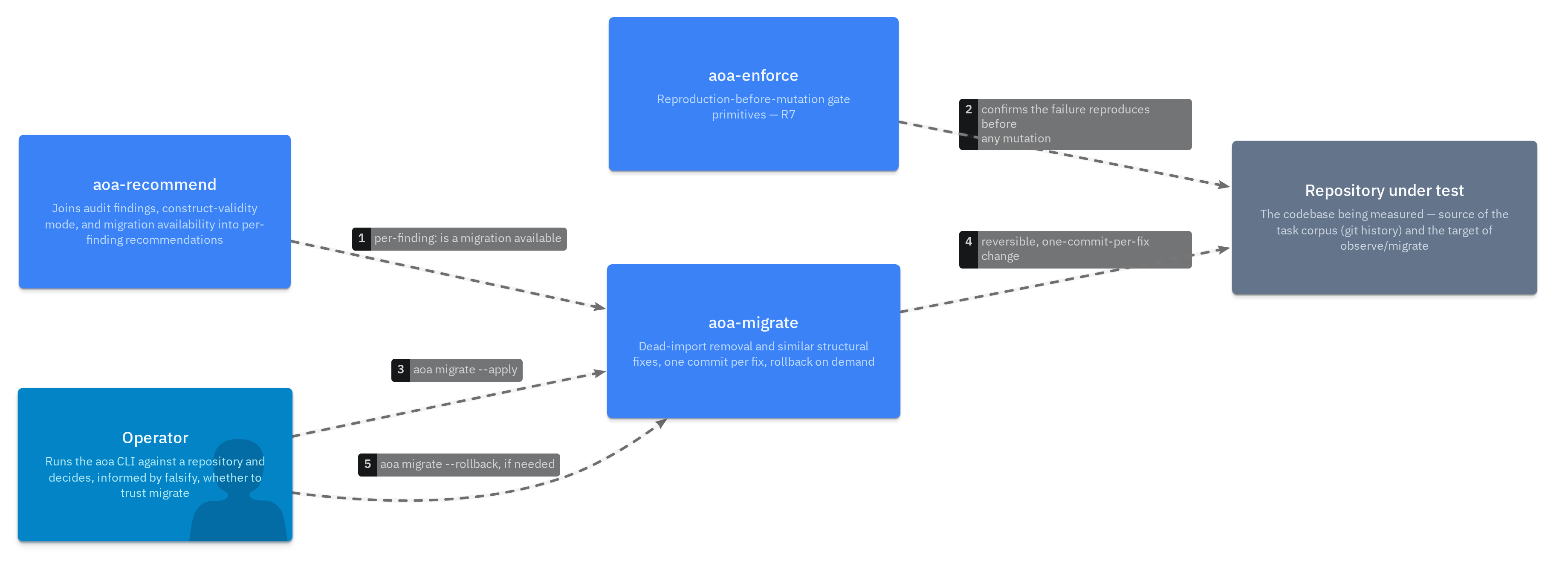
Walkthrough — a gated migration
migrateFlowmigrate stays dry-run by default; --apply only runs once the operator, informed by falsify, decides to trust it on this repo.
Where it runs
Deployment
What runs where, and the process & data boundaries between the pieces.
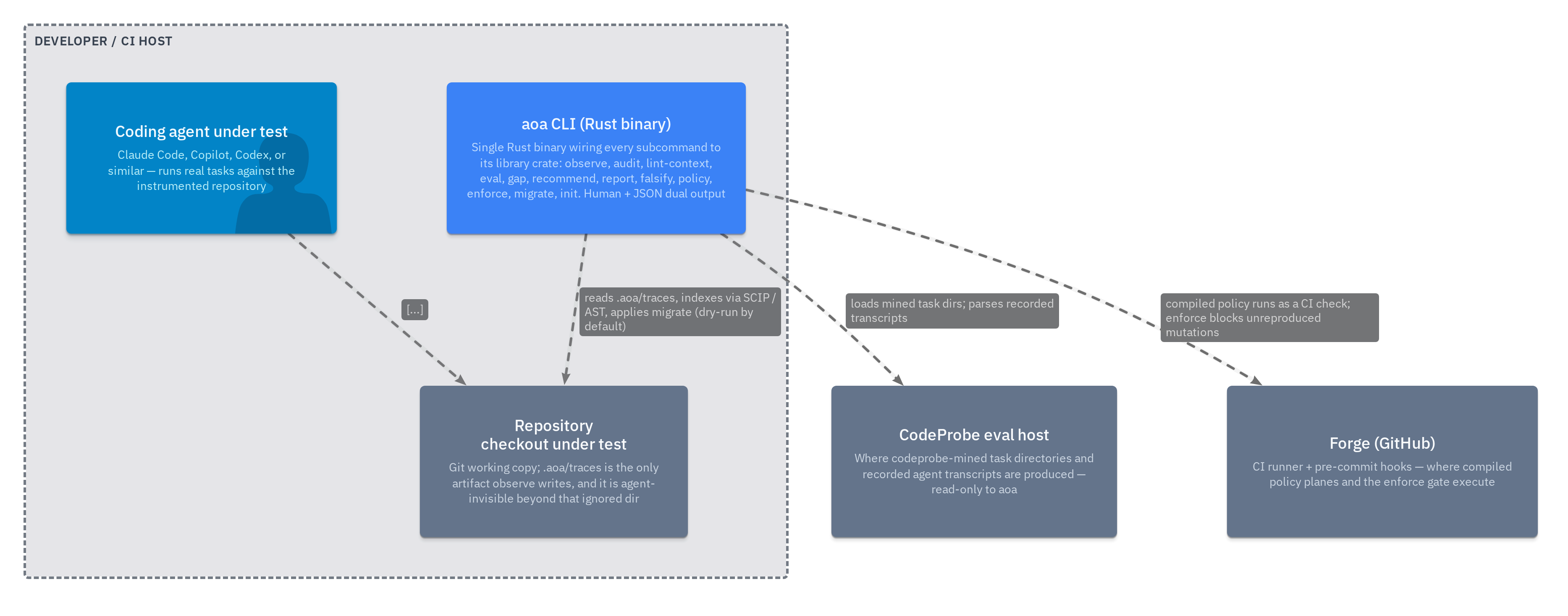
Deployment — where each piece runs
deploymentExplore it live
The figures above are static exports. The interactive explorer lets you pan, zoom, follow relationships, and jump from any box to the source.