Architecture · LikeC4
Agent Tidal Wave
Booth game: guess agent-code magnitude, watch a proportional wave crash, and climb a shared leaderboard
The whole picture
System landscape
The system in context, then opened up into its containers.
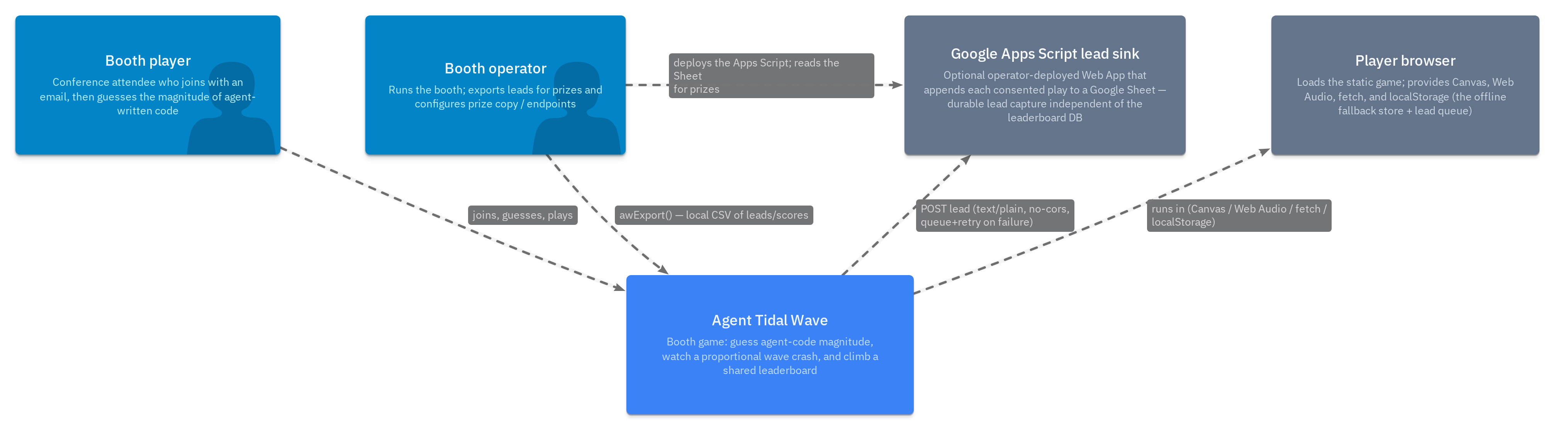
Agent Tidal Wave — system landscape
index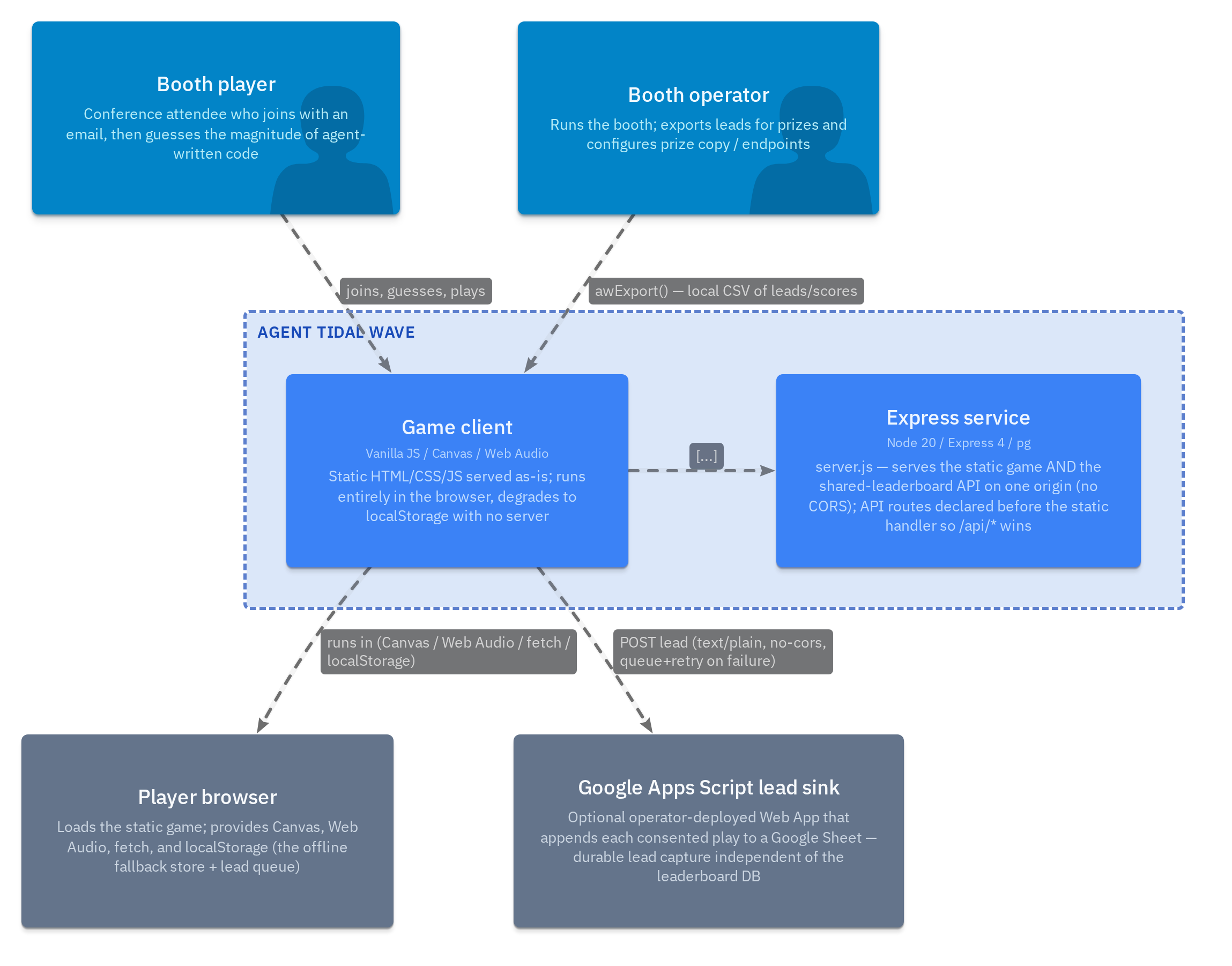
Agent Tidal Wave — containers (client + server)
atwSystemBooth game: guess agent-code magnitude, watch a proportional wave crash, and climb a shared leaderboard
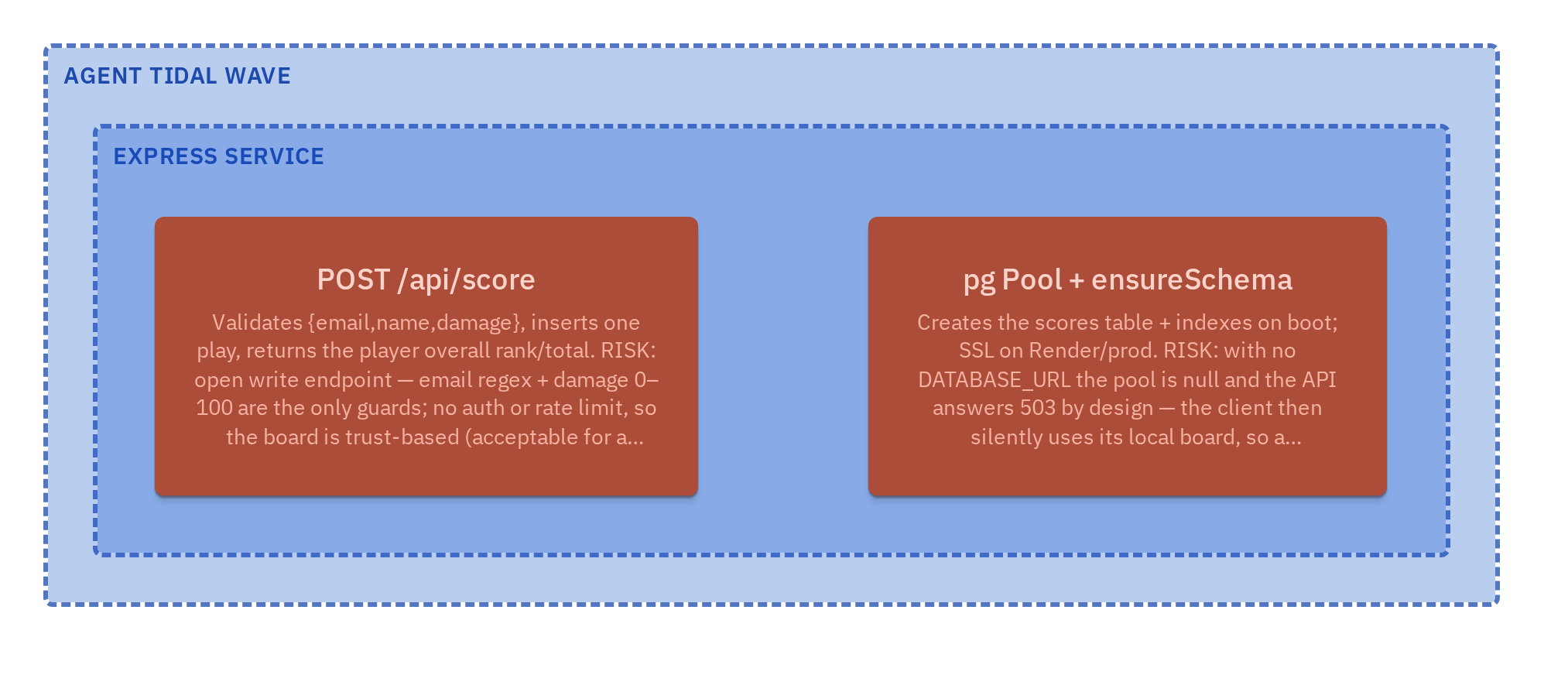
Risks & open questions
risksInside each box
Containers & components
Each part decomposed into the components that implement it. Every box links to its source in the interactive explorer.
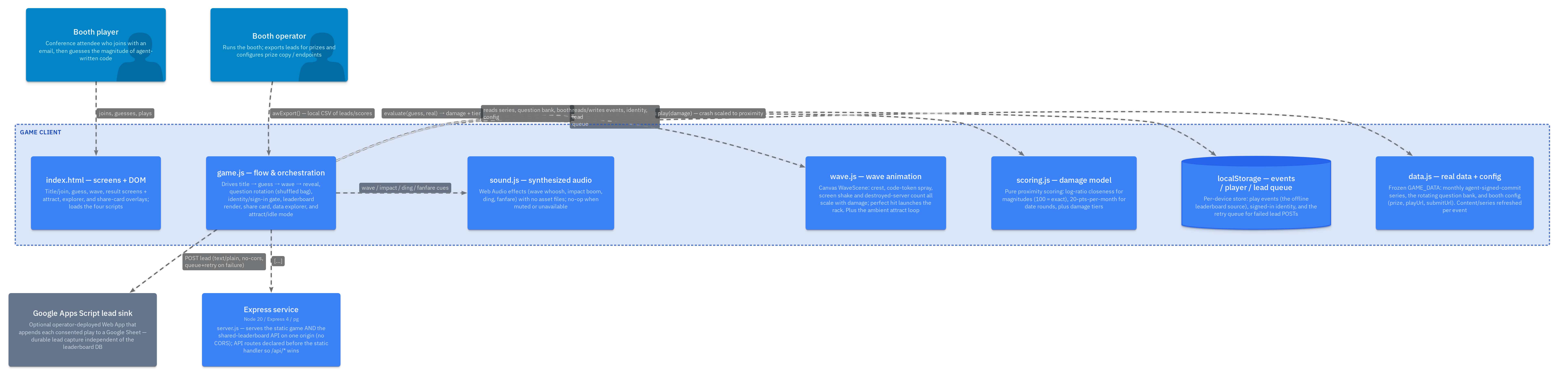
Game client (static, in-browser) — components
clientContainerStatic HTML/CSS/JS served as-is; runs entirely in the browser, degrades to localStorage with no server
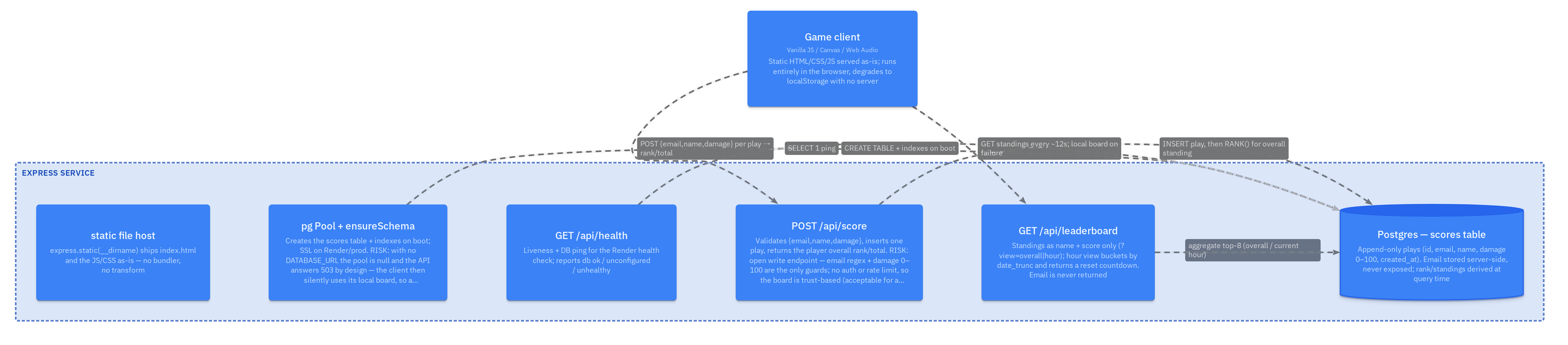
Express service — static host + leaderboard API
serverContainerserver.js — serves the static game AND the shared-leaderboard API on one origin (no CORS); API routes declared before the static handler so /api/* wins
How it runs
Walkthrough flows
Dynamic views — the narrative spine of the system, step by step.
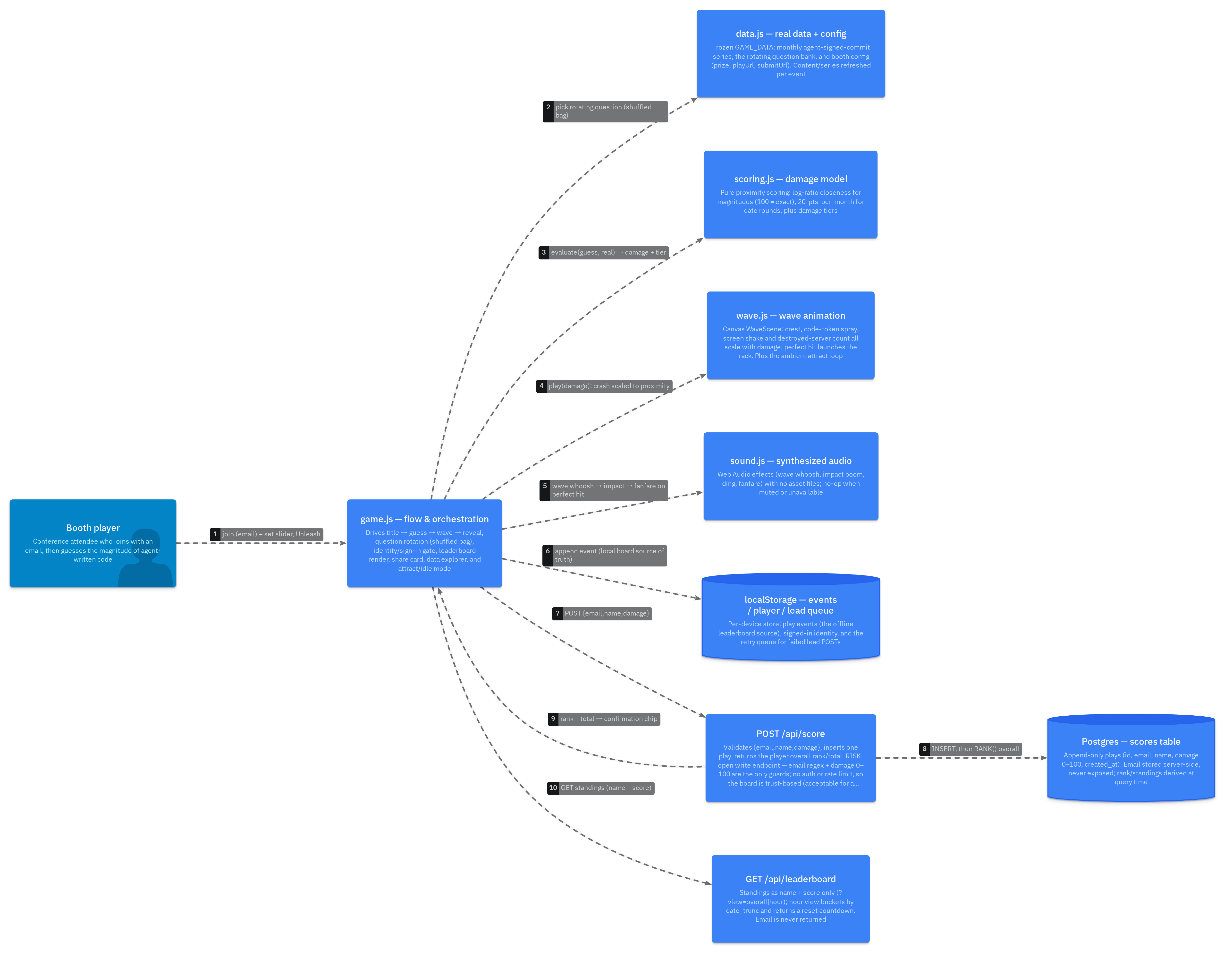
Walkthrough — one play, end to end
playRoundJoining with a valid email gates the first play; afterwards each round auto-records, so a returning player just climbs. The shared board is authoritative when reachable; on any fetch failure the client silently falls back to its local board.
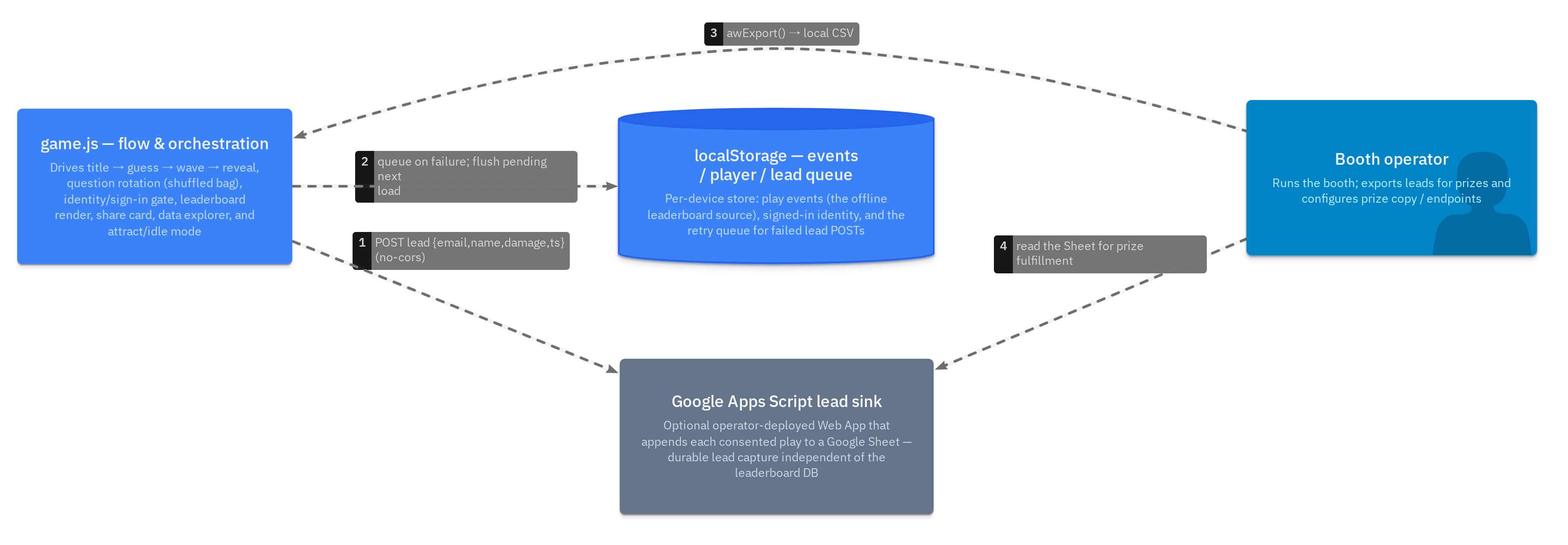
Walkthrough — durable lead capture (optional)
leadCaptureCONFIG-GATED. Active only when data.js config.submitUrl points at the deployed Apps Script. Sent as text/plain + no-cors (a simple request, no preflight); the opaque response is never read, so a real send is never falsely retried. Flaky-wifi failures queue locally and flush on the next load. The local CSV via awExport() is always the backstop.
Where it runs
Deployment
What runs where, and the process & data boundaries between the pieces.
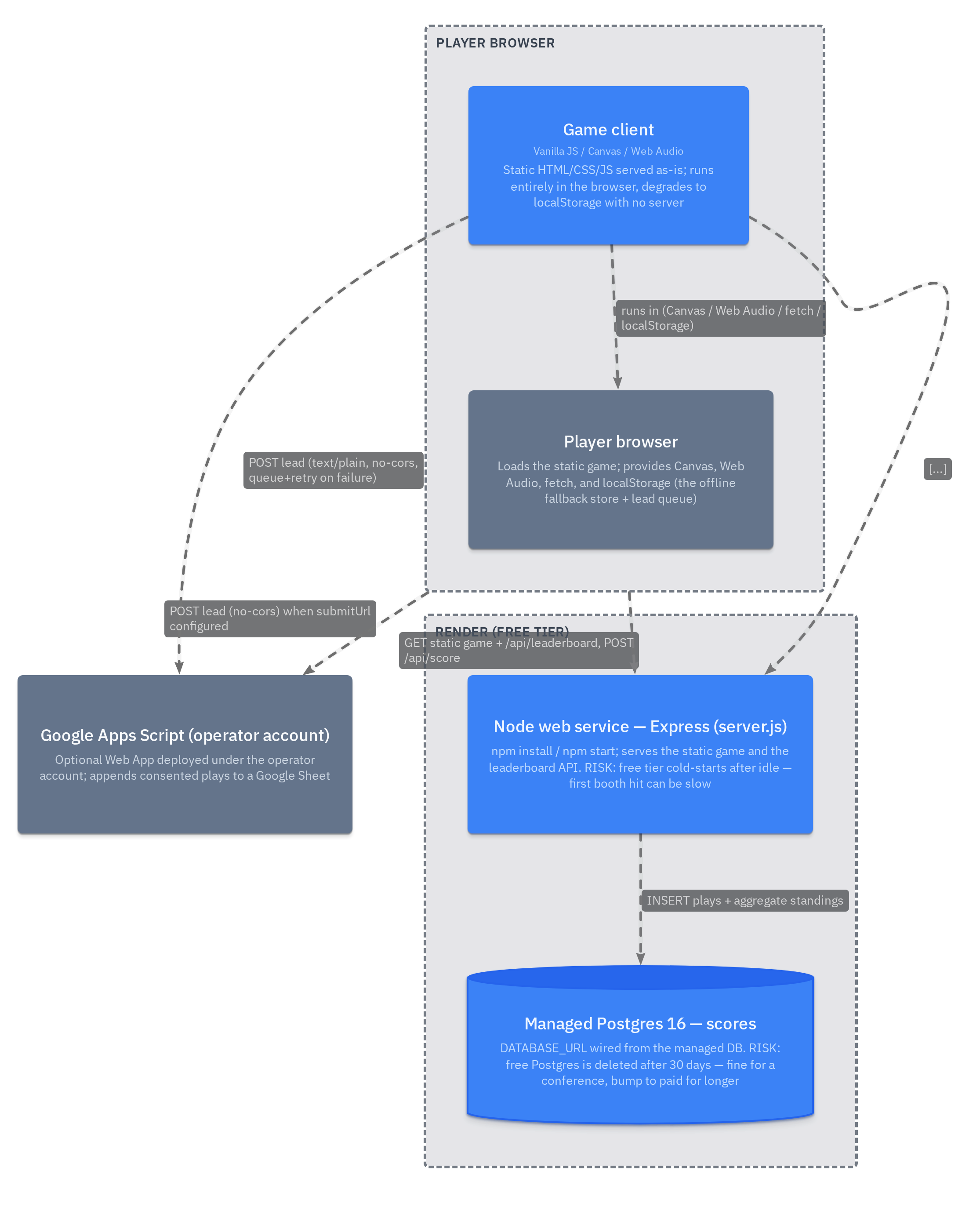
Deployment — where each piece runs
deploymentExplore it live
The figures above are static exports. The interactive explorer lets you pan, zoom, follow relationships, and jump from any box to the source.