Architecture · LikeC4
Ember Tide
A backend-free, single-screen cooperative deck-builder — React 19 + Zustand + Vite compiled to a static bundle, state in memory only, no accounts and no tracking
The whole picture
System landscape
The system in context, then opened up into its containers.
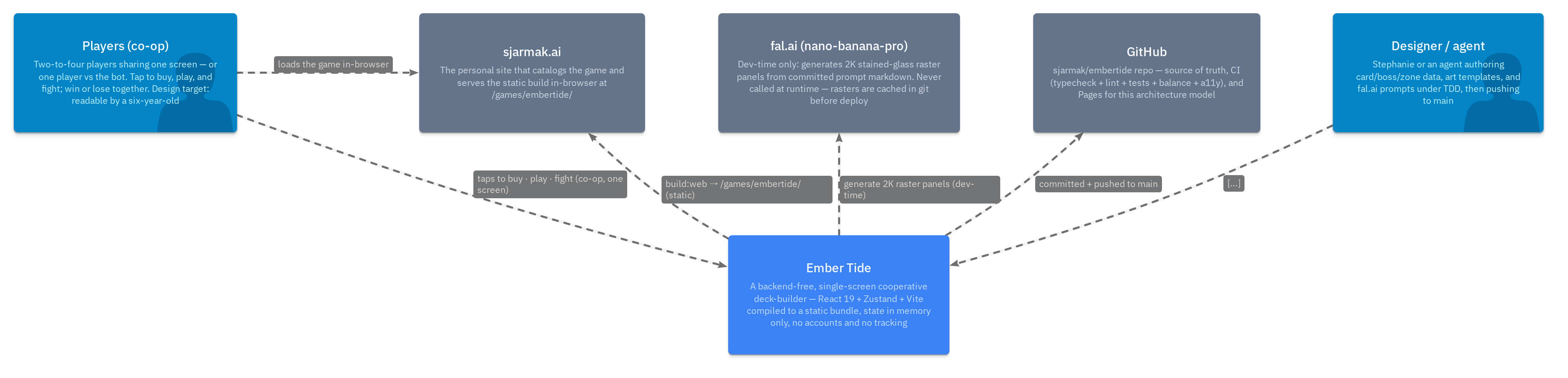
Ember Tide — system landscape
index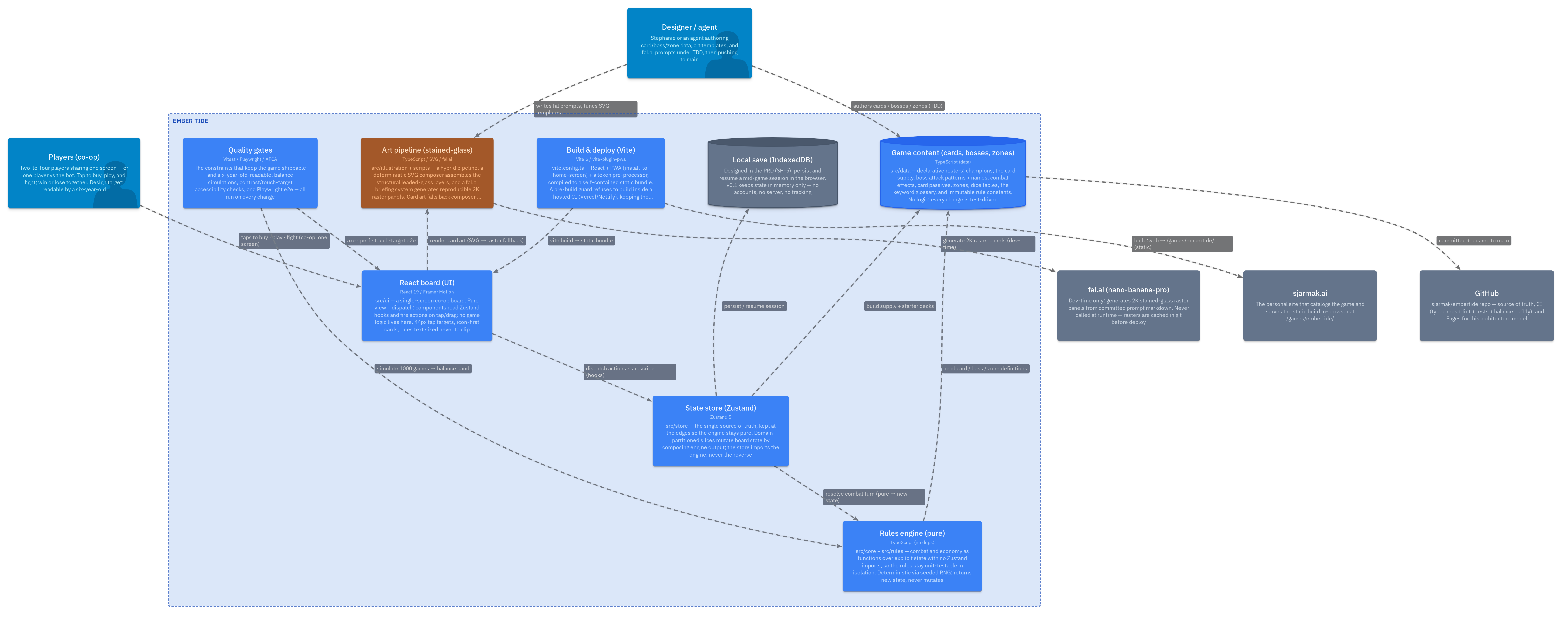
Ember Tide — containers (content → engine → store → UI, with art, gates & build)
embertideSystemA backend-free, single-screen cooperative deck-builder — React 19 + Zustand + Vite compiled to a static bundle, state in memory only, no accounts and no tracking
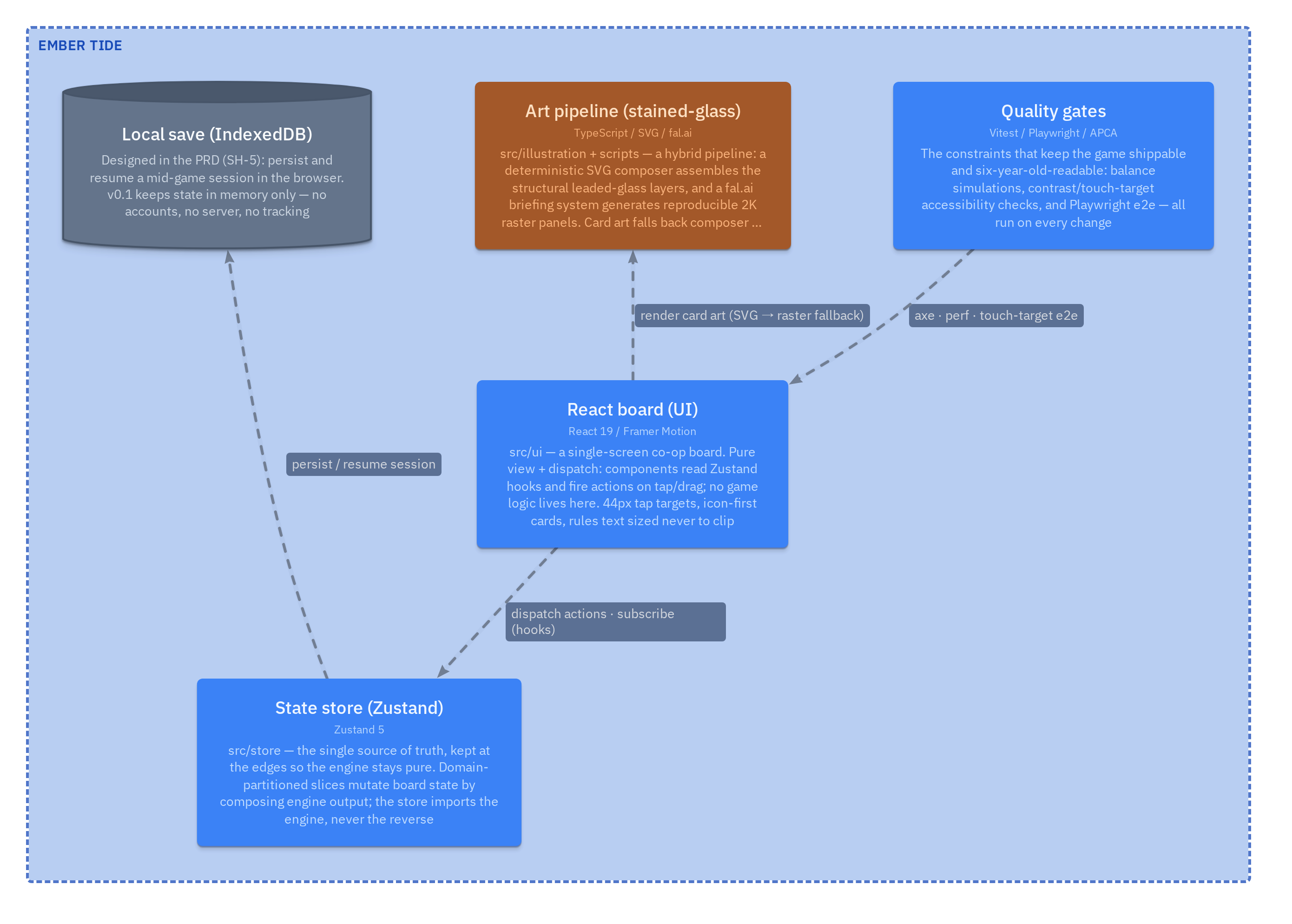
Moving parts — evolving, dev-time & planned surfaces
movingPartsInside each box
Containers & components
Each part decomposed into the components that implement it. Every box links to its source in the interactive explorer.
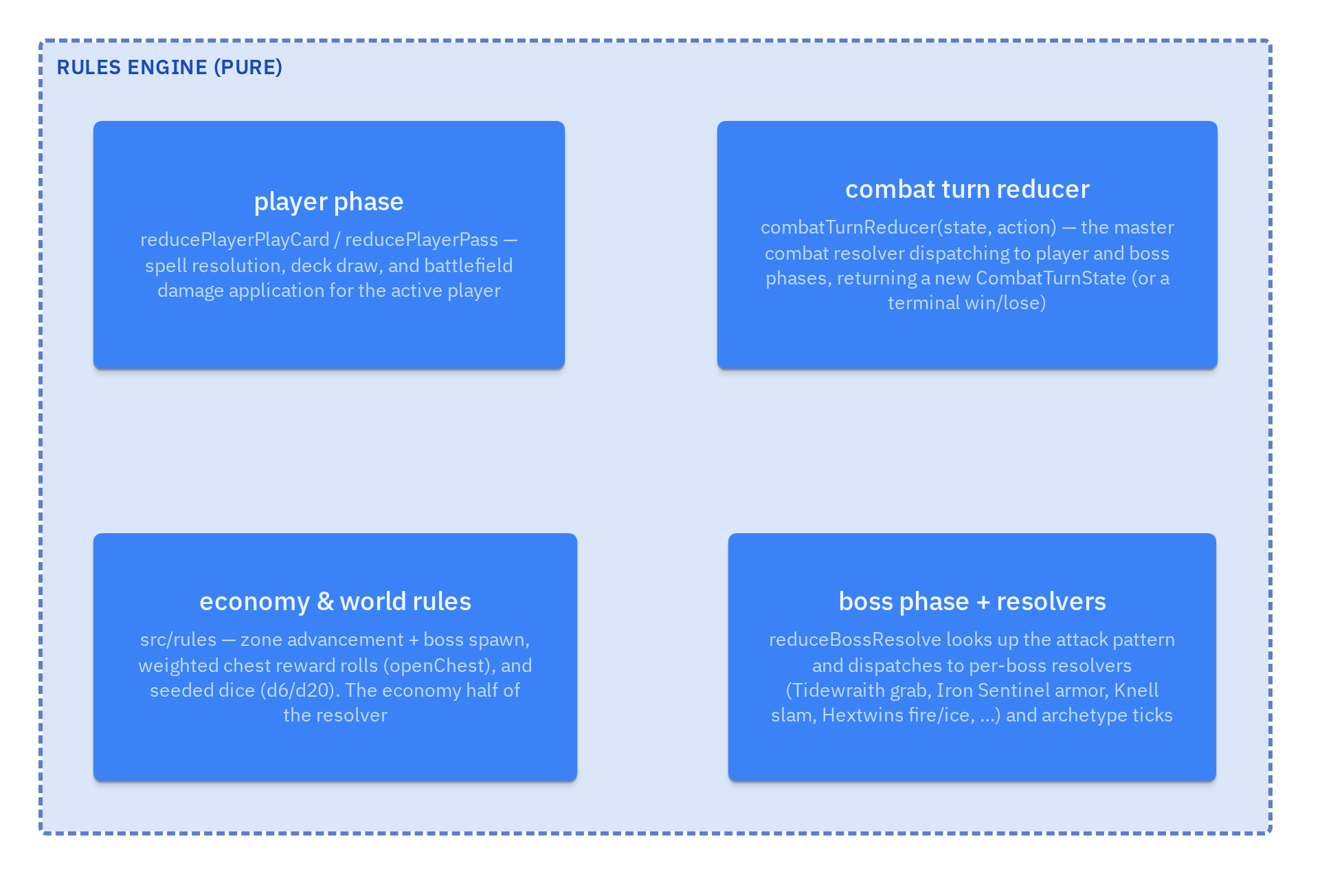
Rules engine — pure combat + economy resolver
engineContainersrc/core + src/rules — combat and economy as functions over explicit state with no Zustand imports, so the rules stay unit-testable in isolation. Deterministic via seeded RNG; returns new state, never mutates
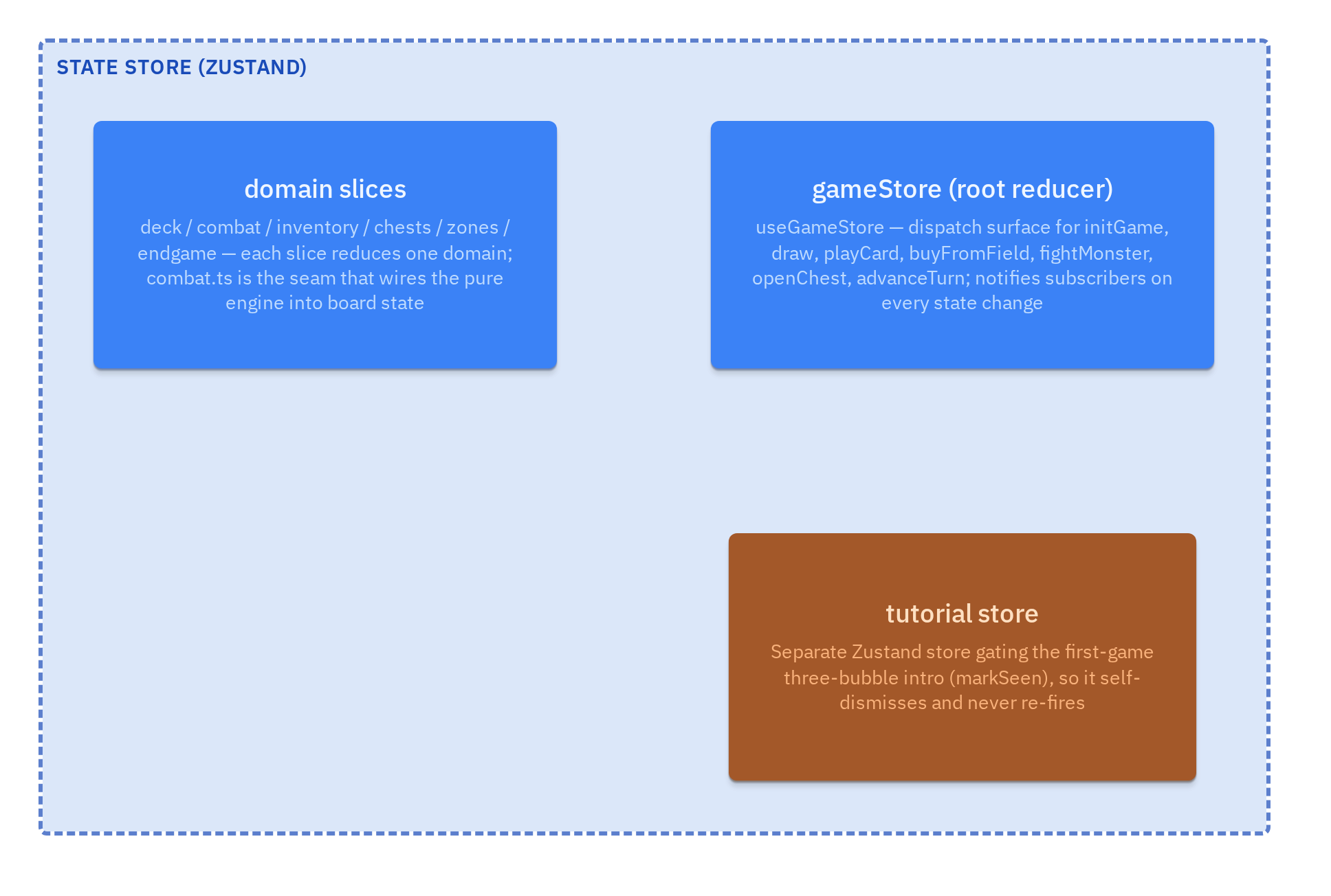
State store — Zustand slices at the edges
storeContainersrc/store — the single source of truth, kept at the edges so the engine stays pure. Domain-partitioned slices mutate board state by composing engine output; the store imports the engine, never the reverse
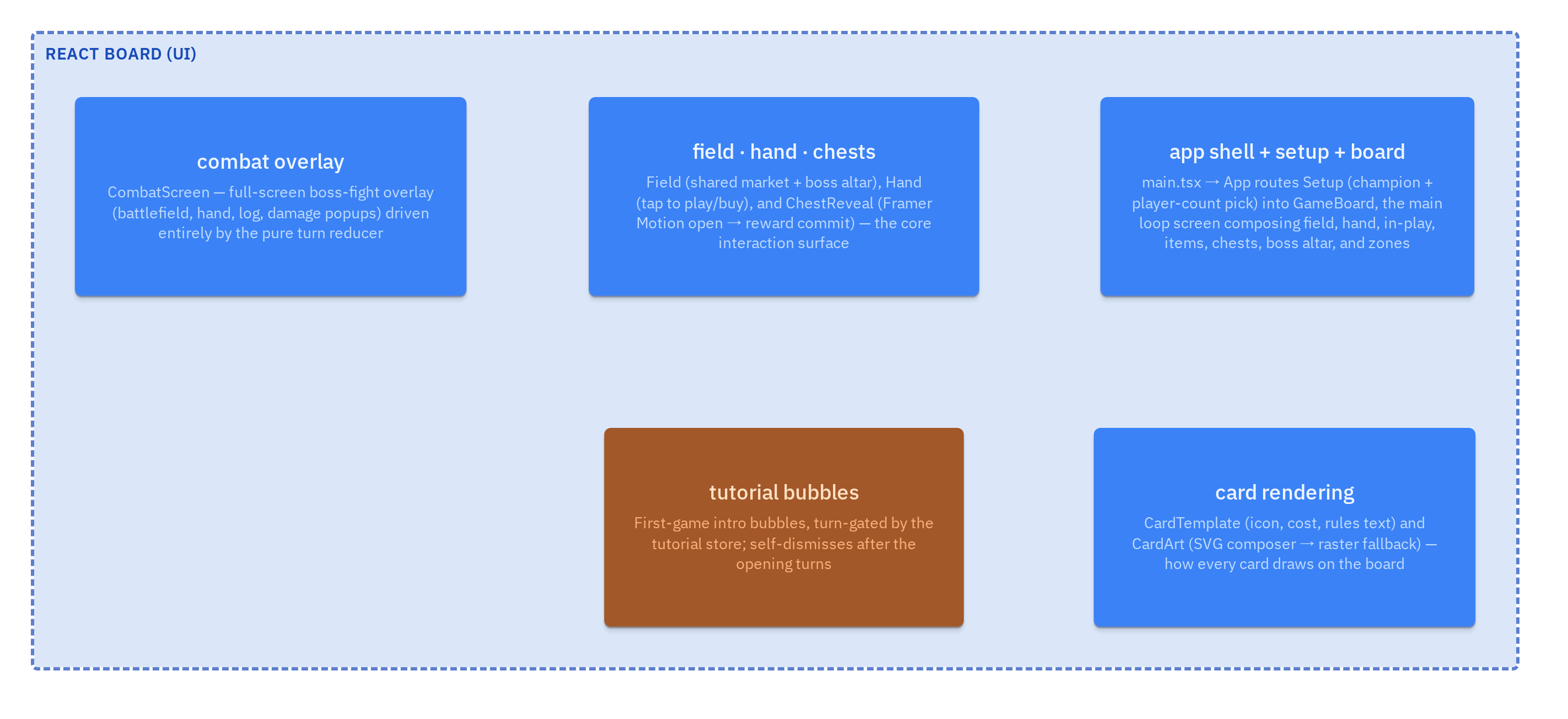
React board — single-screen UI
uiContainersrc/ui — a single-screen co-op board. Pure view + dispatch: components read Zustand hooks and fire actions on tap/drag; no game logic lives here. 44px tap targets, icon-first cards, rules text sized never to clip
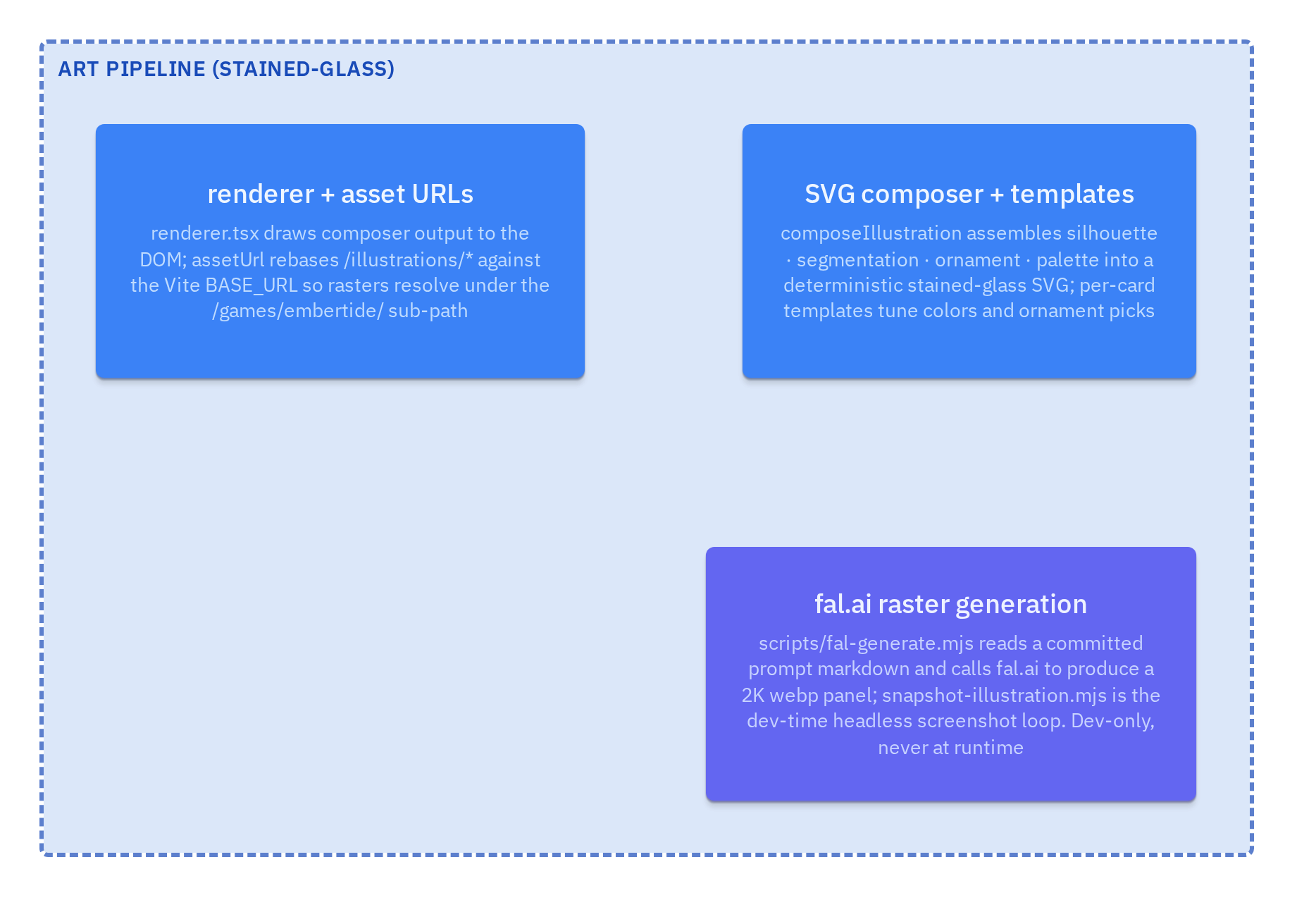
Art pipeline — SVG composer + fal.ai raster panels
artContainersrc/illustration + scripts — a hybrid pipeline: a deterministic SVG composer assembles the structural leaded-glass layers, and a fal.ai briefing system generates reproducible 2K raster panels. Card art falls back composer → committed raster
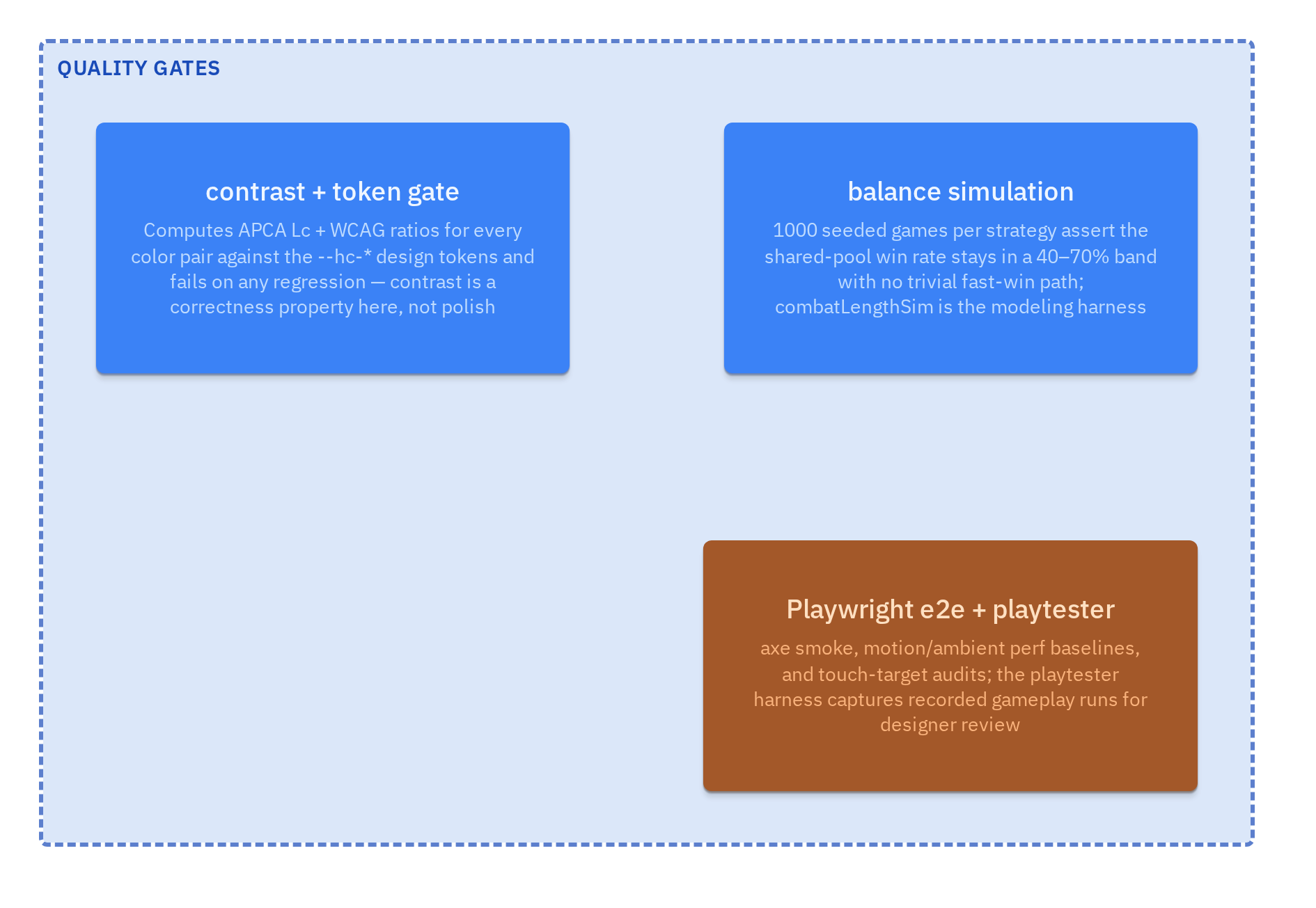
Quality gates — balance, accessibility & e2e
gatesContainerThe constraints that keep the game shippable and six-year-old-readable: balance simulations, contrast/touch-target accessibility checks, and Playwright e2e — all run on every change
How it runs
Walkthrough flows
Dynamic views — the narrative spine of the system, step by step.

Walkthrough — a tap becomes new state
playFlowThe clean spine in motion. A tap is a dispatch; the store composes the pure engine output into board state; Zustand notifies subscribers and the view re-renders. No game logic lives in the UI, and the engine never imports the store.
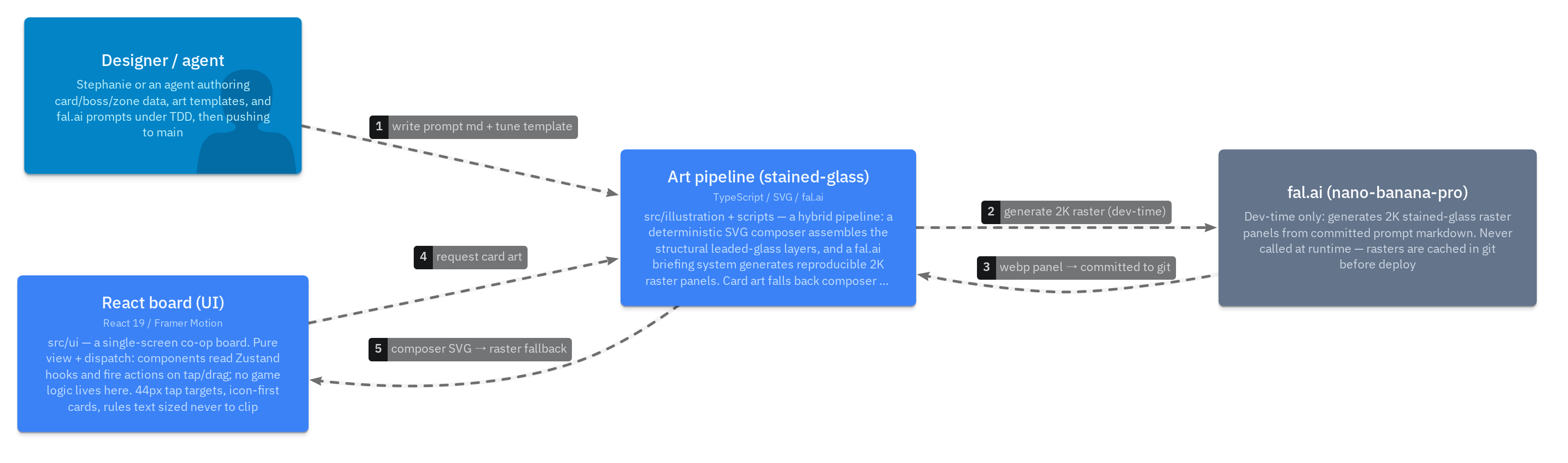
Walkthrough — rendering stained-glass art
artFlowA hybrid pipeline. The deterministic SVG composer always produces structural leaded-glass layers; where a reproducible 2K raster panel exists (generated offline from a committed fal.ai prompt and cached in git), the renderer prefers it. Nothing calls fal.ai at runtime.
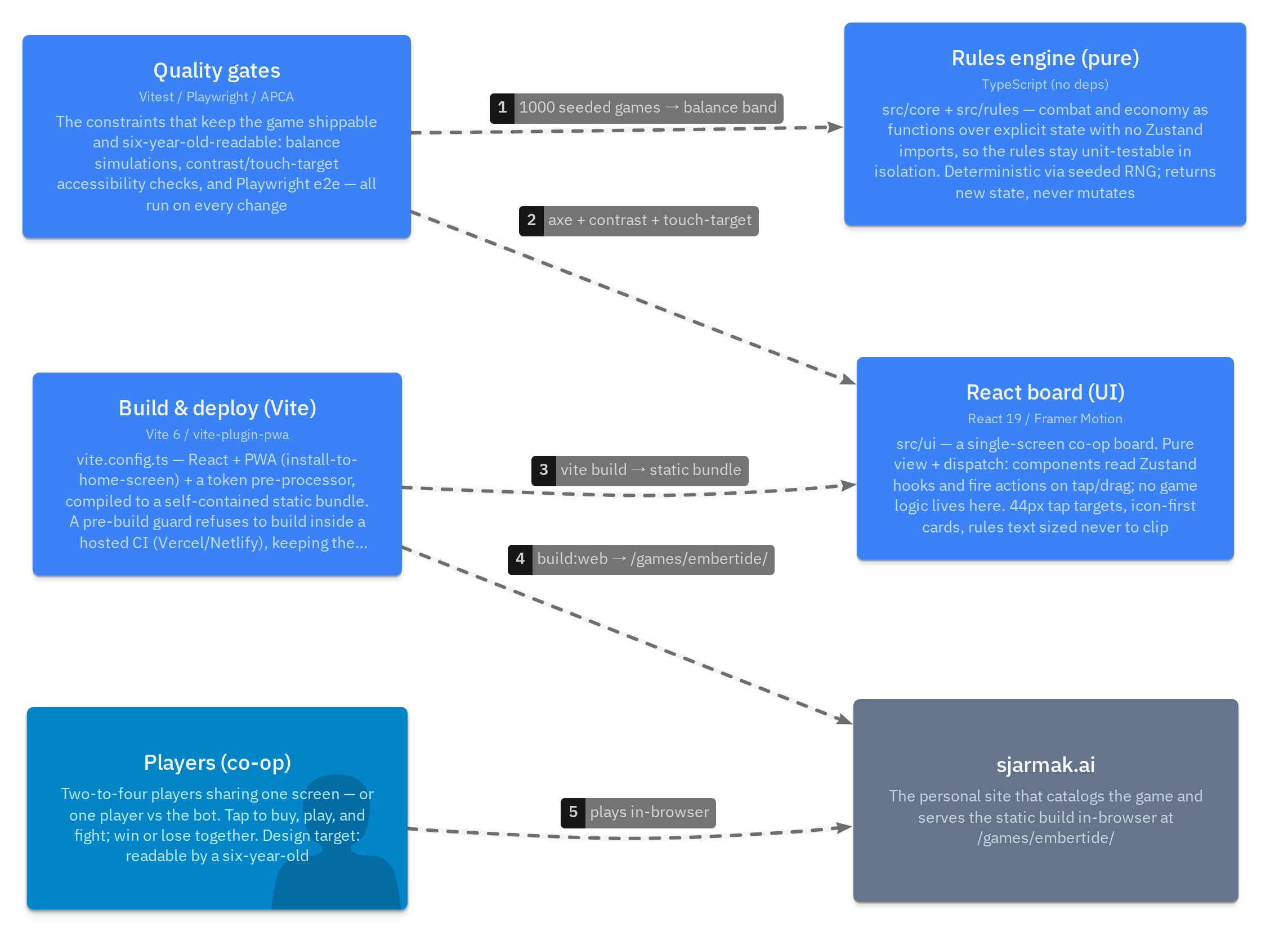
Walkthrough — the quality gates
gateFlowBalance and readability are correctness properties, not polish. Every change runs balance simulations against the pure engine (win rate in a 40–70% band) and contrast/touch-target checks against the UI; a hosted-CI deploy guard keeps the build local-household only before it ships to the website.
Where it runs
Deployment
What runs where, and the process & data boundaries between the pieces.
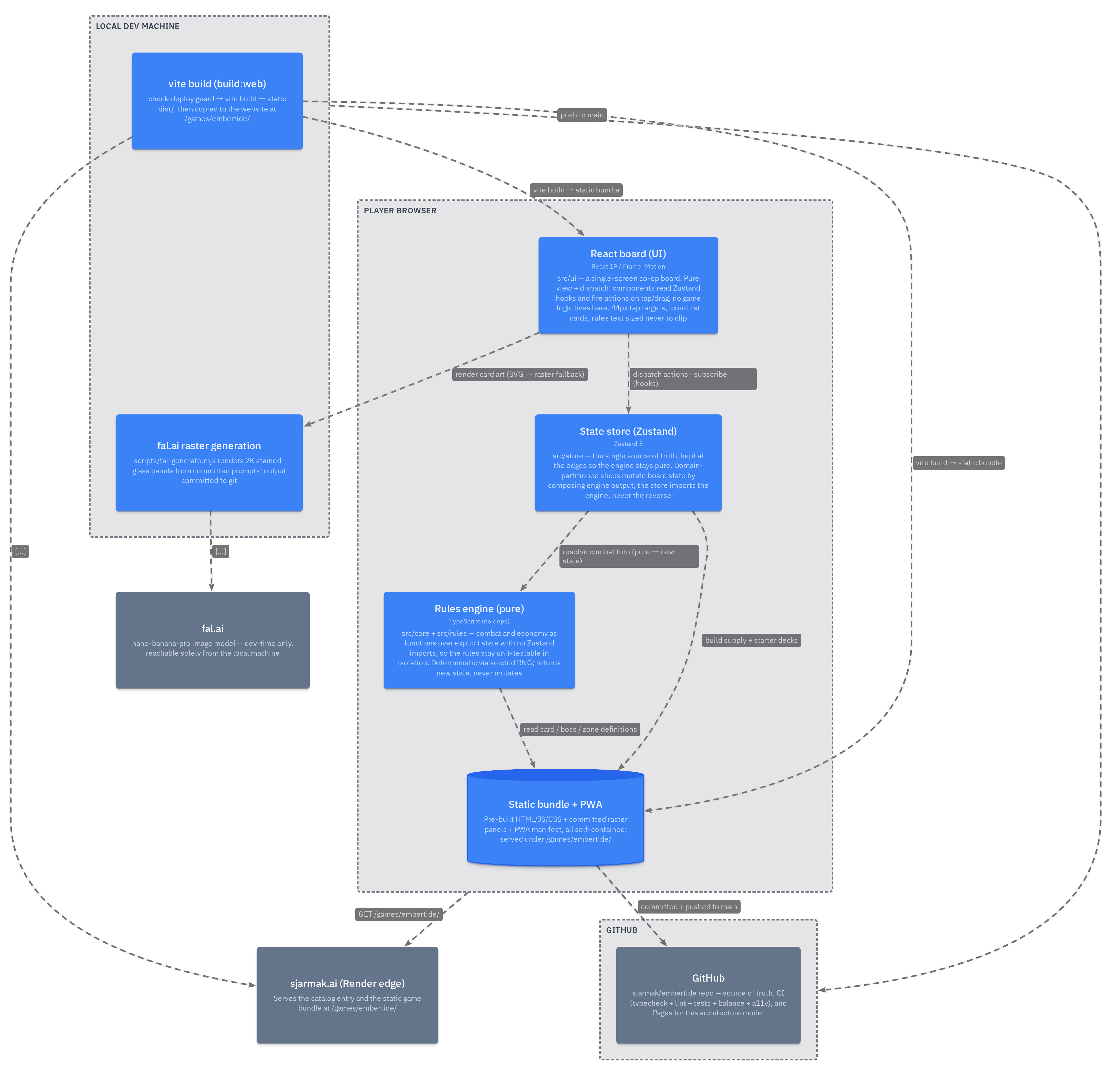
Deployment — where each piece runs
deploymentExplore it live
The figures above are static exports. The interactive explorer lets you pan, zoom, follow relationships, and jump from any box to the source.