Architecture · LikeC4
GEO
Measures and optimizes how generative engines surface a target product; reports share-of-voice, recall, and misrepresentation, and gates model-update drift
The whole picture
System landscape
The system in context, then opened up into its containers.
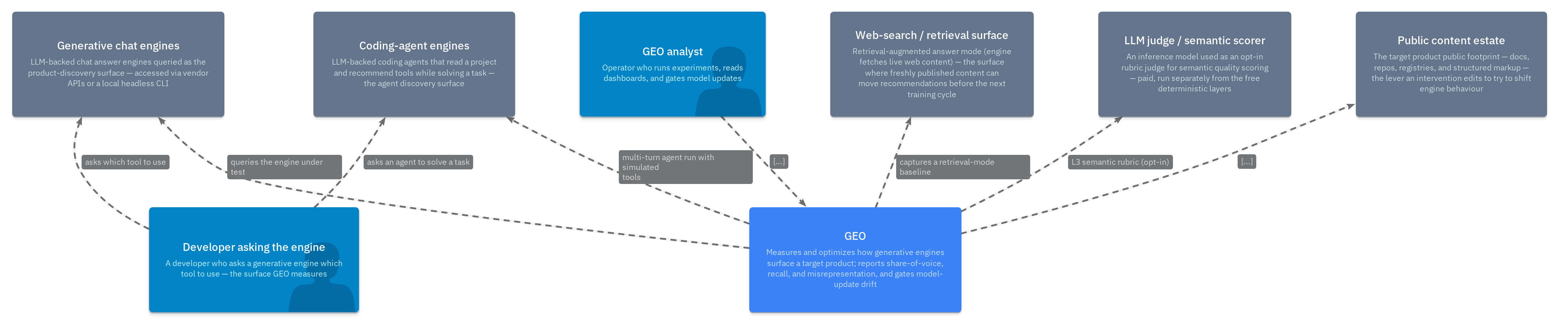
GEO — system landscape
index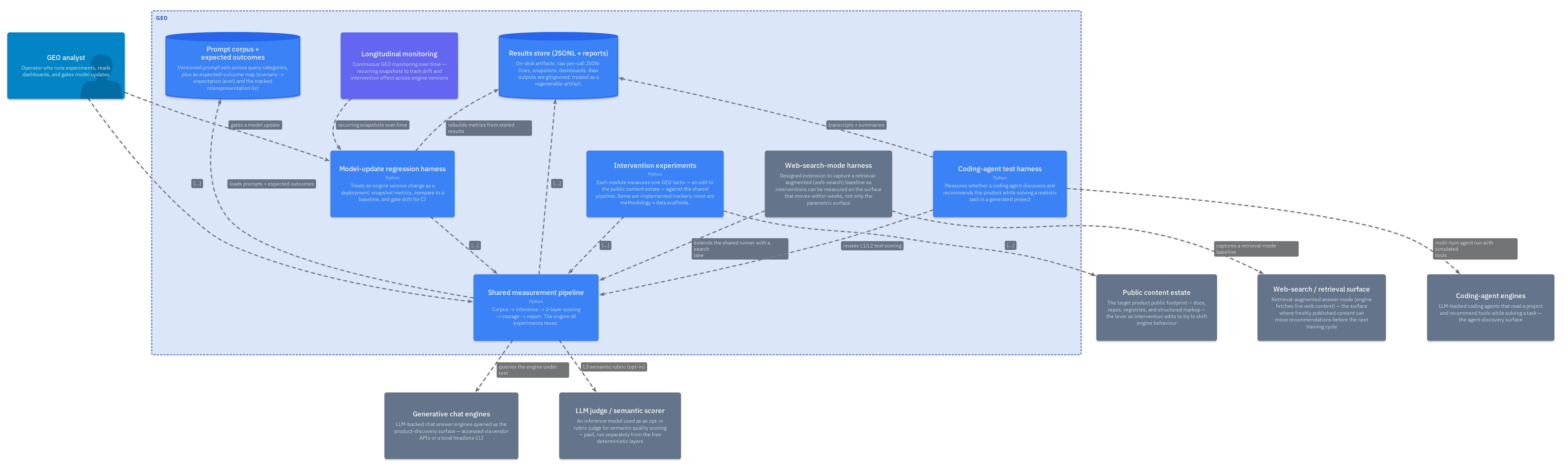
GEO — containers (built vs planned)
geoSystemMeasures and optimizes how generative engines surface a target product; reports share-of-voice, recall, and misrepresentation, and gates model-update drift
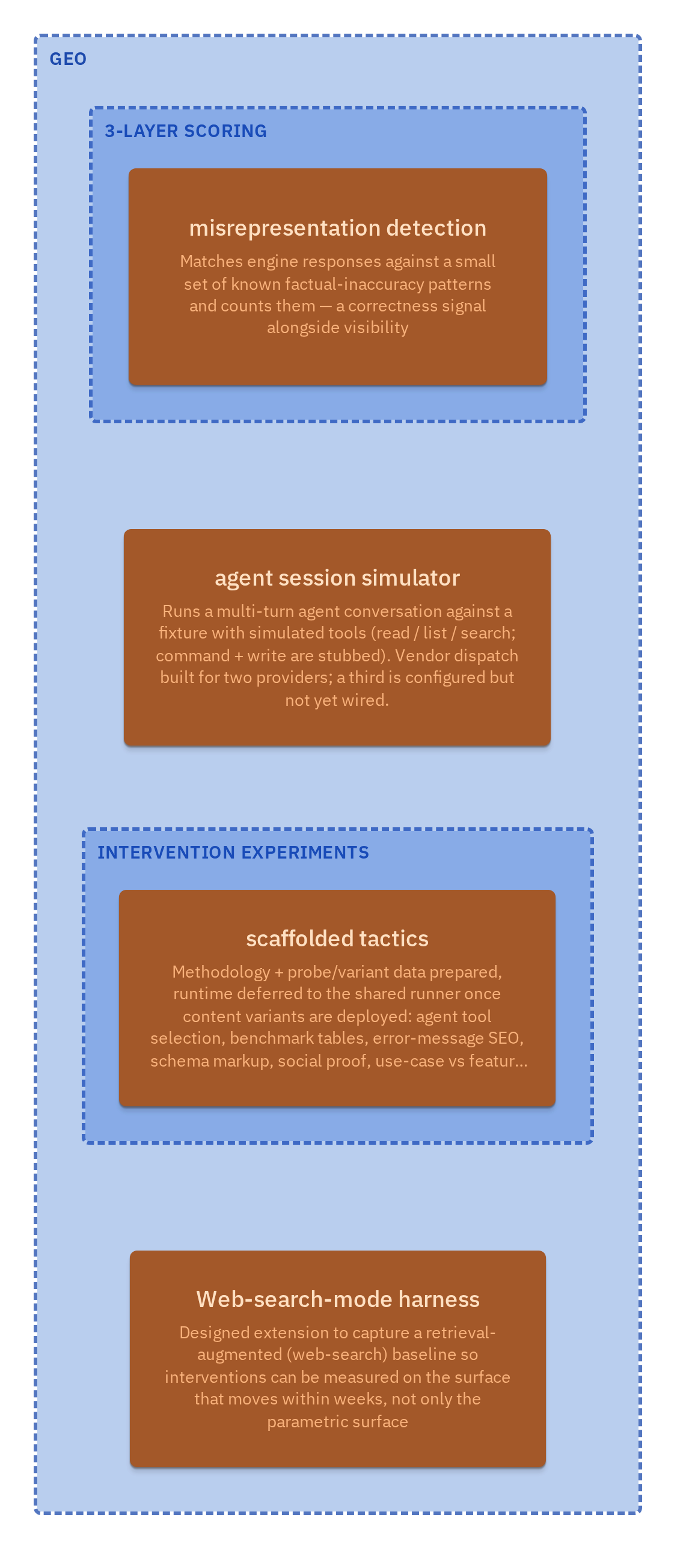
Risks & open questions
risks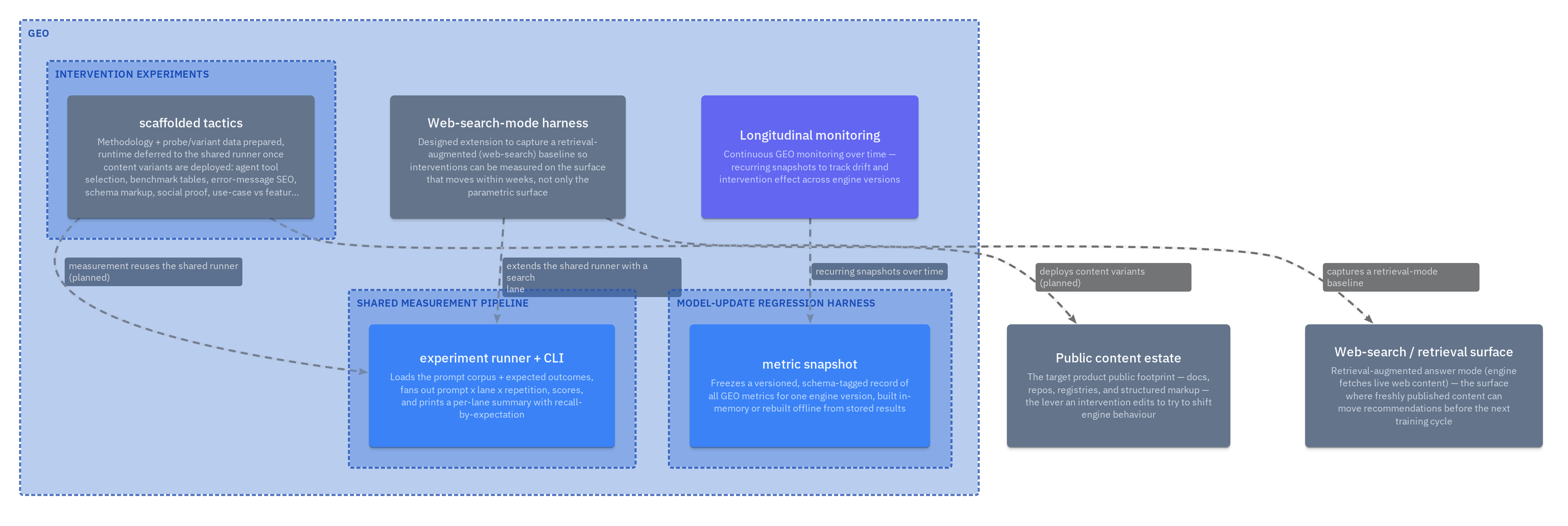
Planned & research work
plannedInside each box
Containers & components
Each part decomposed into the components that implement it. Every box links to its source in the interactive explorer.
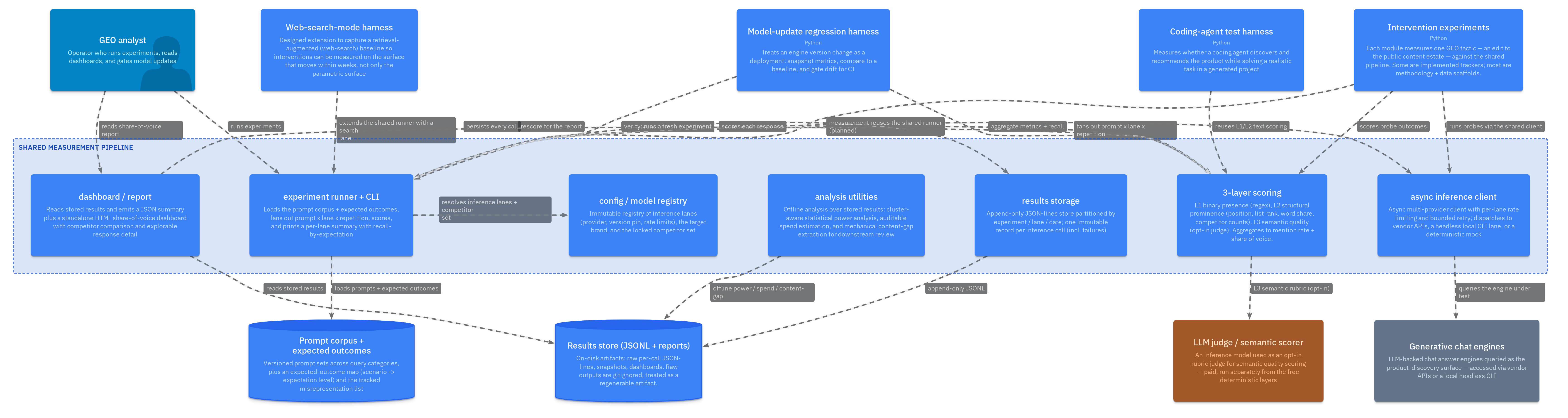
Shared measurement pipeline — components
sharedContainerCorpus -> inference -> 3-layer scoring -> storage -> report. The engine all experiments reuse.
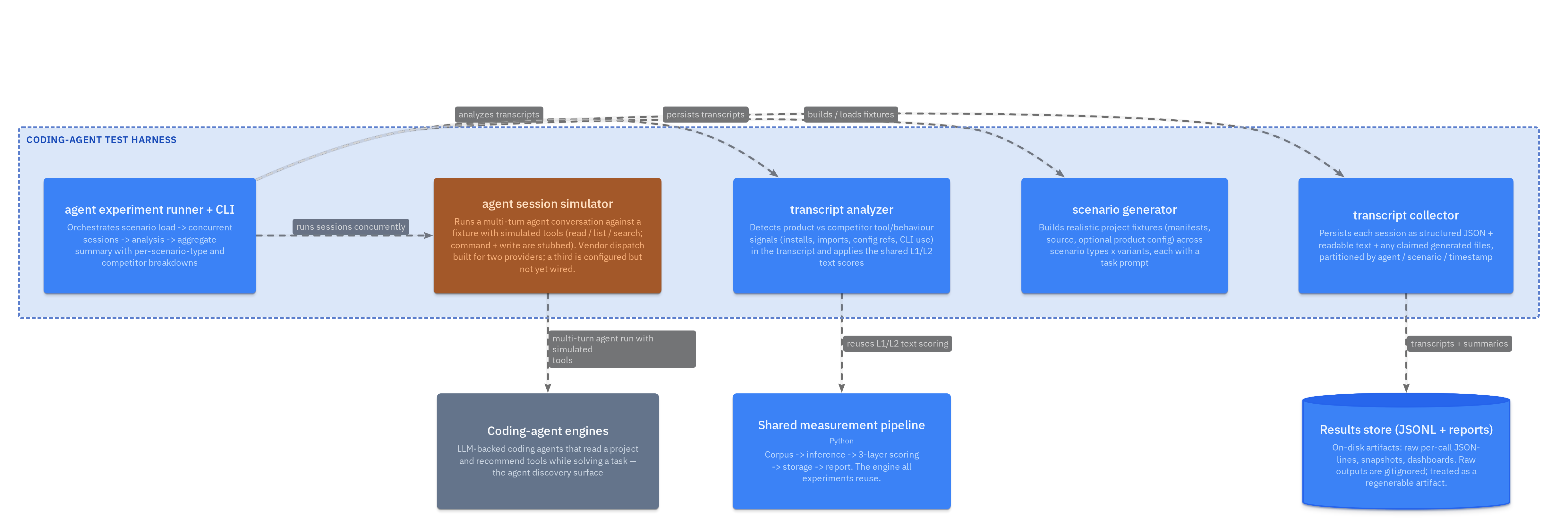
Coding-agent test harness — components
agentsContainerMeasures whether a coding agent discovers and recommends the product while solving a realistic task in a generated project
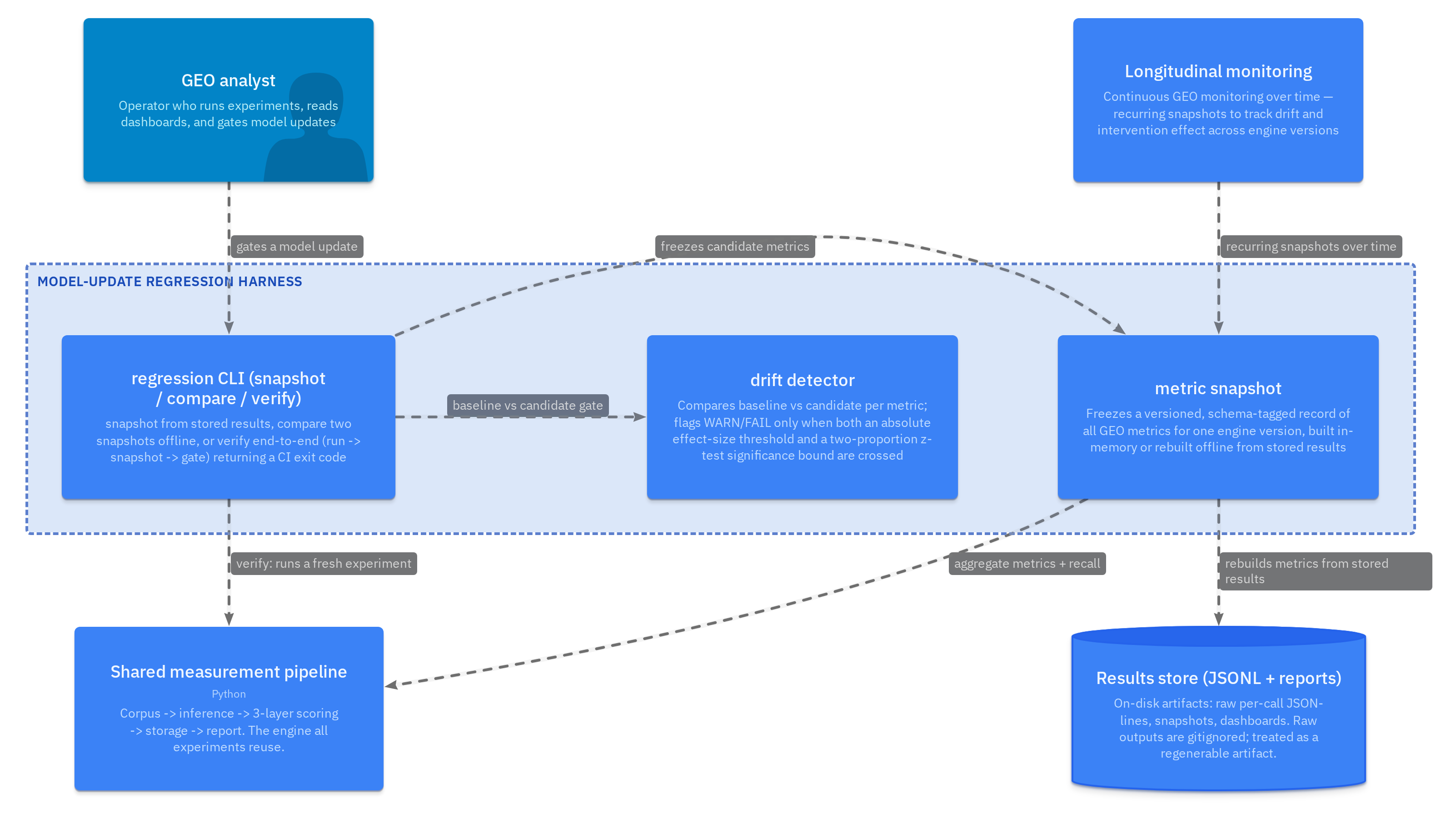
Model-update regression harness — components
regressionContainerTreats an engine version change as a deployment: snapshot metrics, compare to a baseline, and gate drift for CI
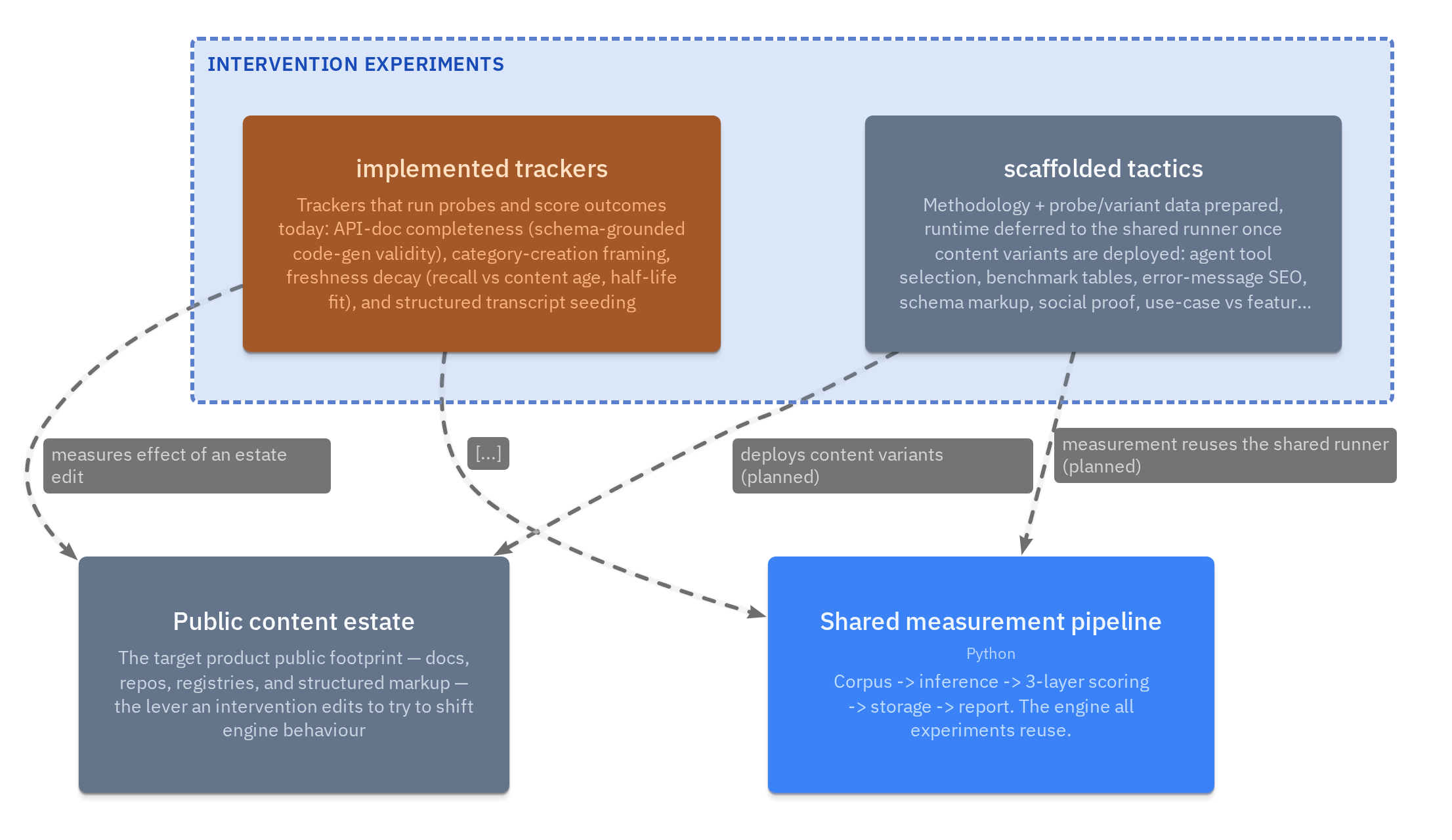
Intervention experiments — implemented vs scaffolded
interventionsContainerEach module measures one GEO tactic — an edit to the public content estate — against the shared pipeline. Some are implemented trackers; most are methodology + data scaffolds.
How it runs
Walkthrough flows
Dynamic views — the narrative spine of the system, step by step.
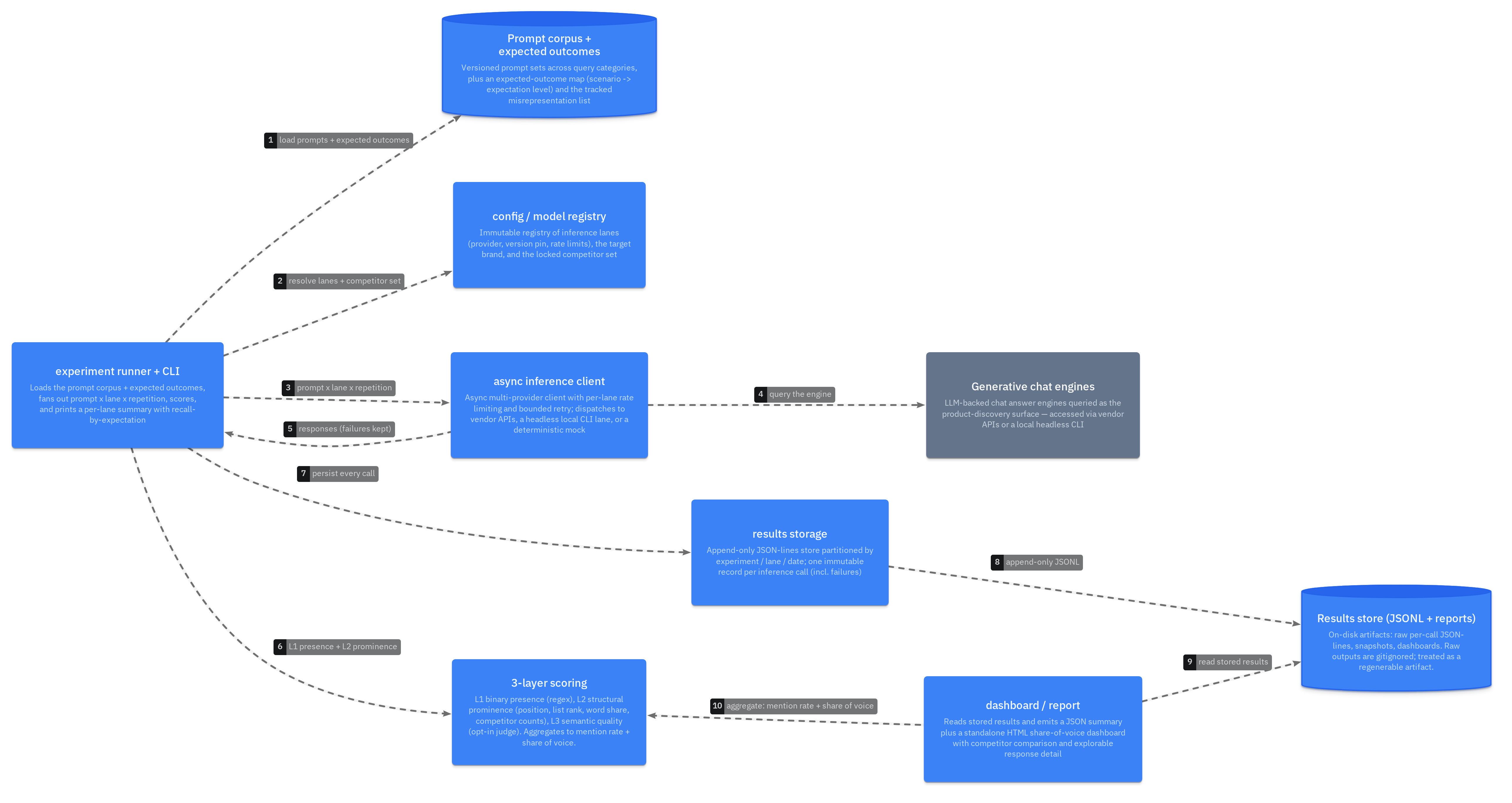
Walkthrough — one measurement run end-to-end
measureRunLoad the corpus, fan out prompt x lane x repetition against the engine under test, score deterministically (L1/L2), persist every call, then build the share-of-voice report. The paid L3 judge is opt-in.
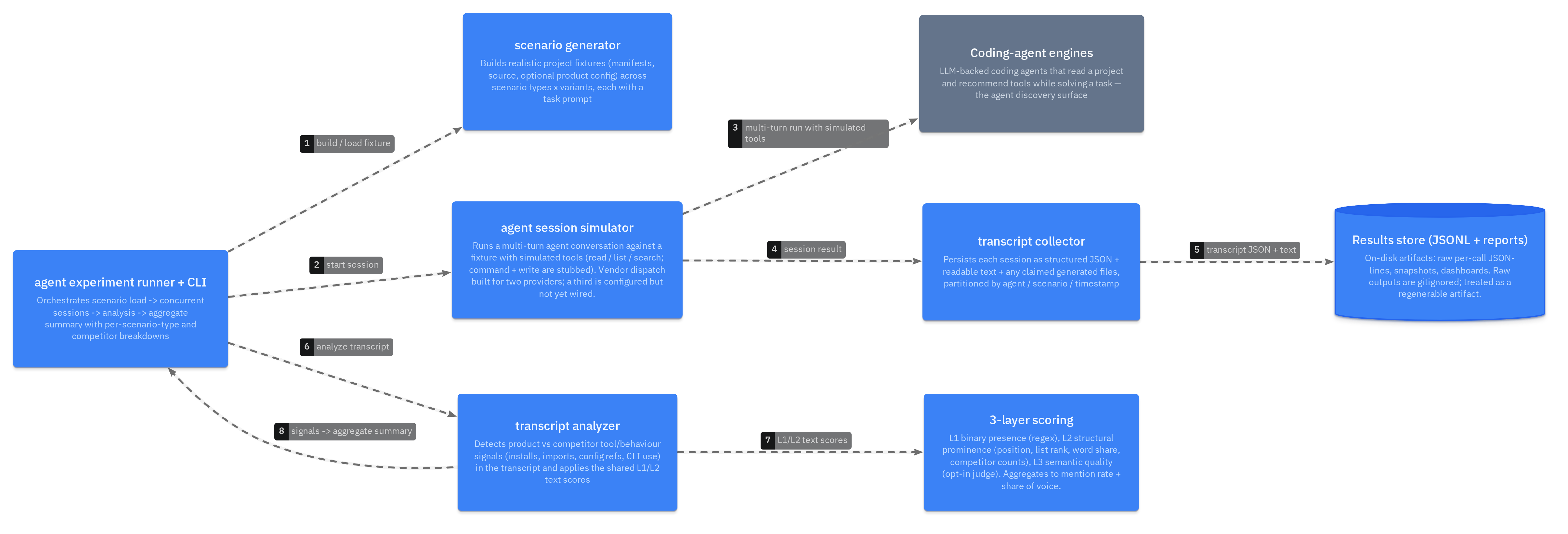
Walkthrough — a coding-agent session
agentRunFlowA realistic project fixture is generated, the agent solves the task over multiple turns with simulated tools, the transcript is collected, then analyzed for product vs competitor signals using the shared text scorers.
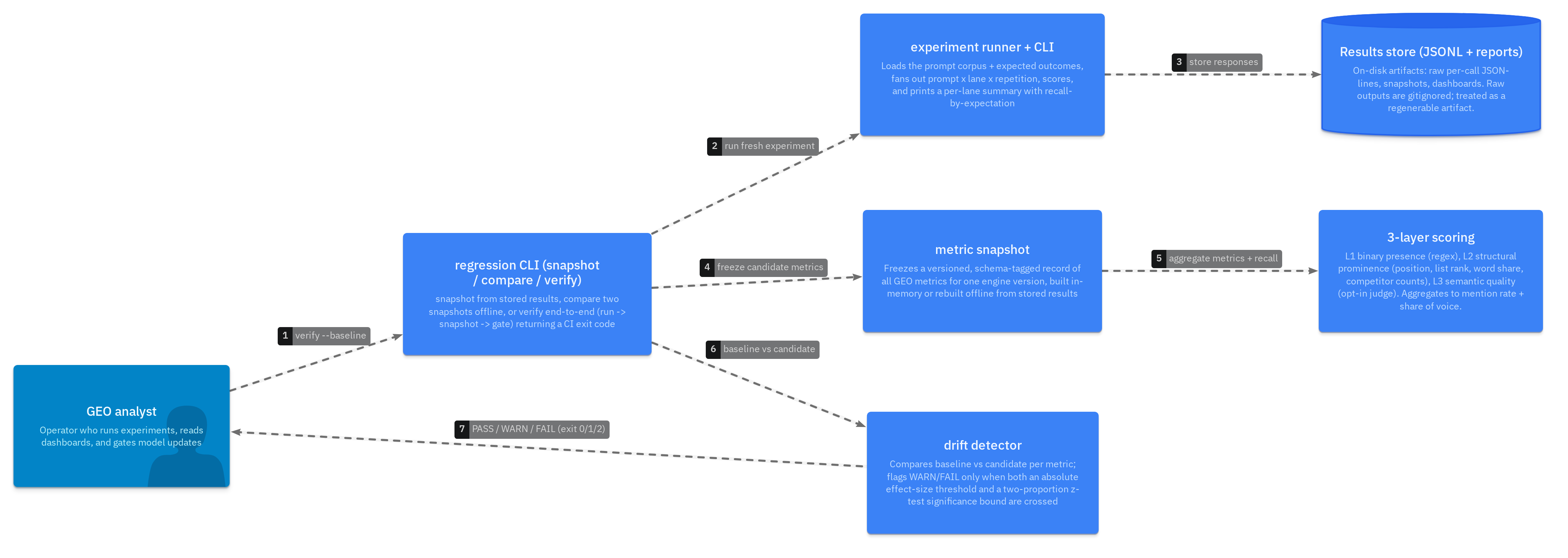
Walkthrough — model-update regression gate
regressionFlowverify treats a version change as a deployment: run a fresh experiment, snapshot its metrics, and compare to a frozen baseline. A metric is only flagged when both effect size and a two-proportion z-test agree; the exit code drives CI.
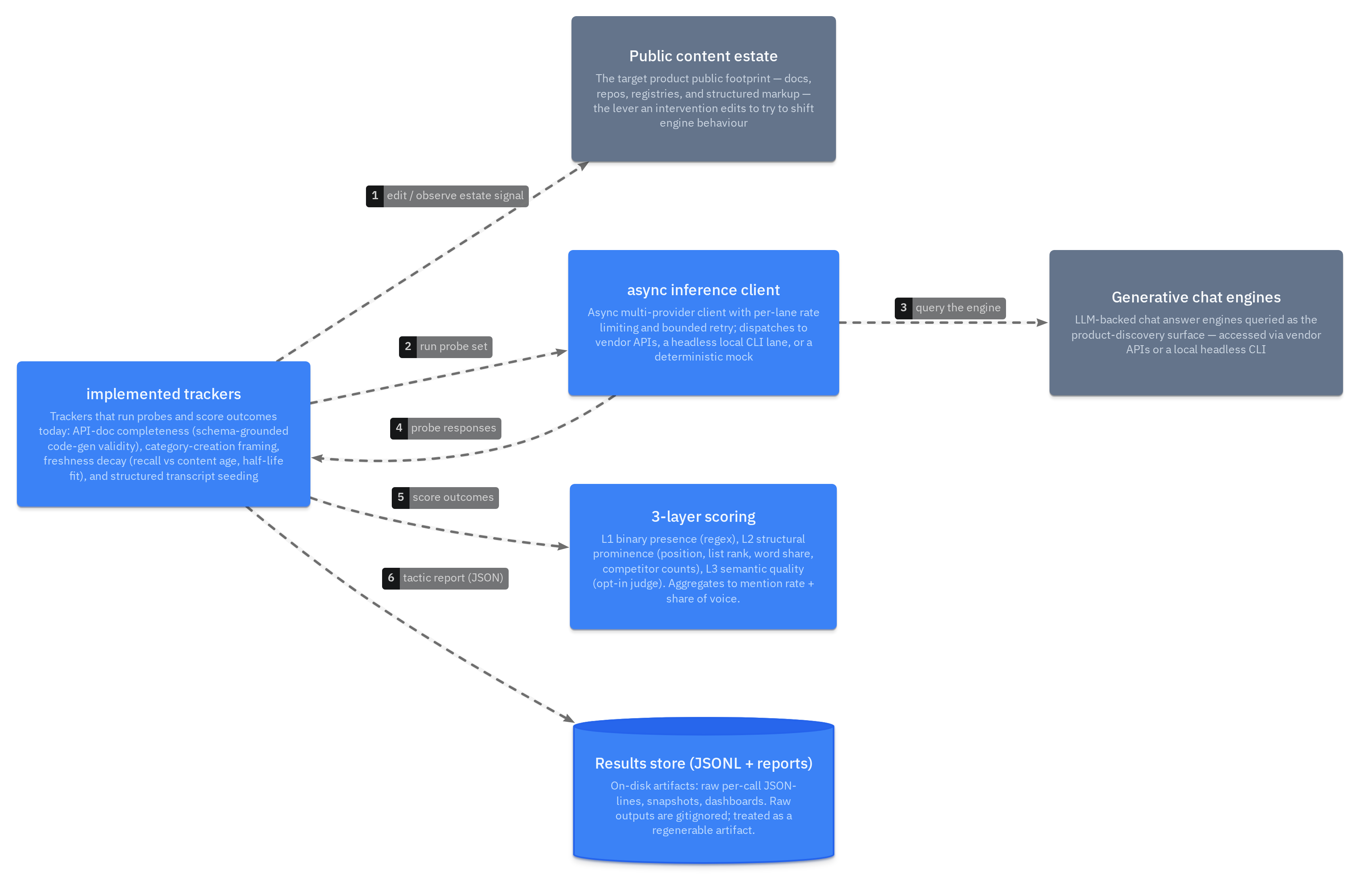
Walkthrough — measuring one intervention tactic
interventionFlowAn implemented tracker edits/observes the public content estate, runs its probe set through the shared client, scores the outcomes, and reports the tactic-specific metric (e.g. recall vs content age for freshness decay).
Where it runs
Deployment
What runs where, and the process & data boundaries between the pieces.
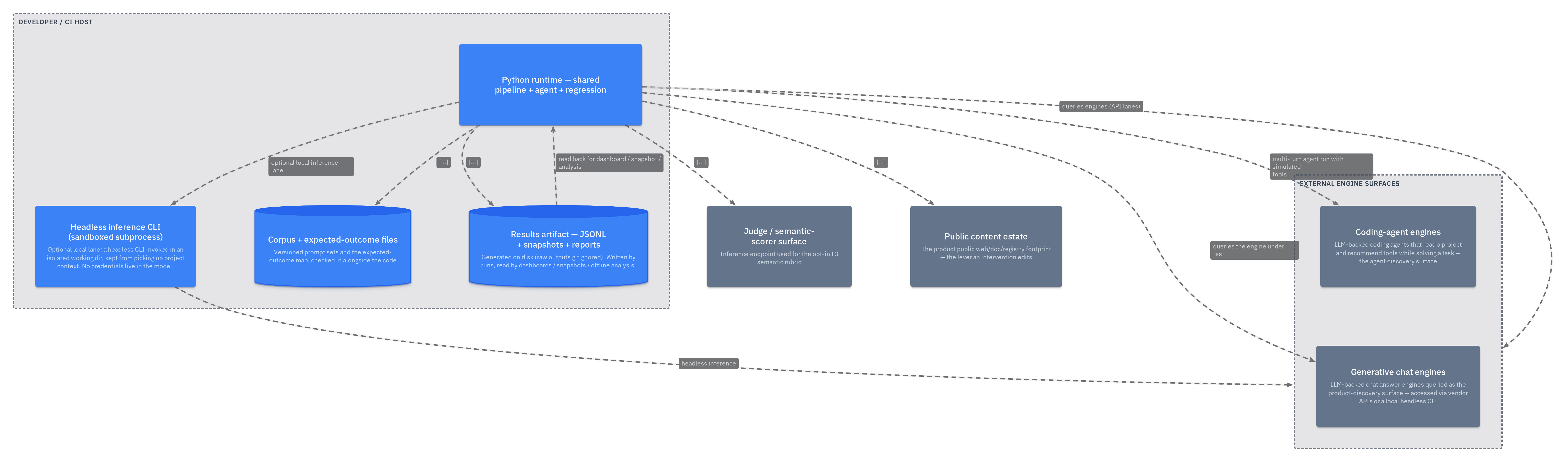
Deployment — where each piece runs
deploymentExplore it live
The figures above are static exports. The interactive explorer lets you pan, zoom, follow relationships, and jump from any box to the source.