Architecture · LikeC4
mem
Turns the work spine + transcripts into a work-audit graph, then benchmarks memory on it
The whole picture
System landscape
The system in context, then opened up into its containers.
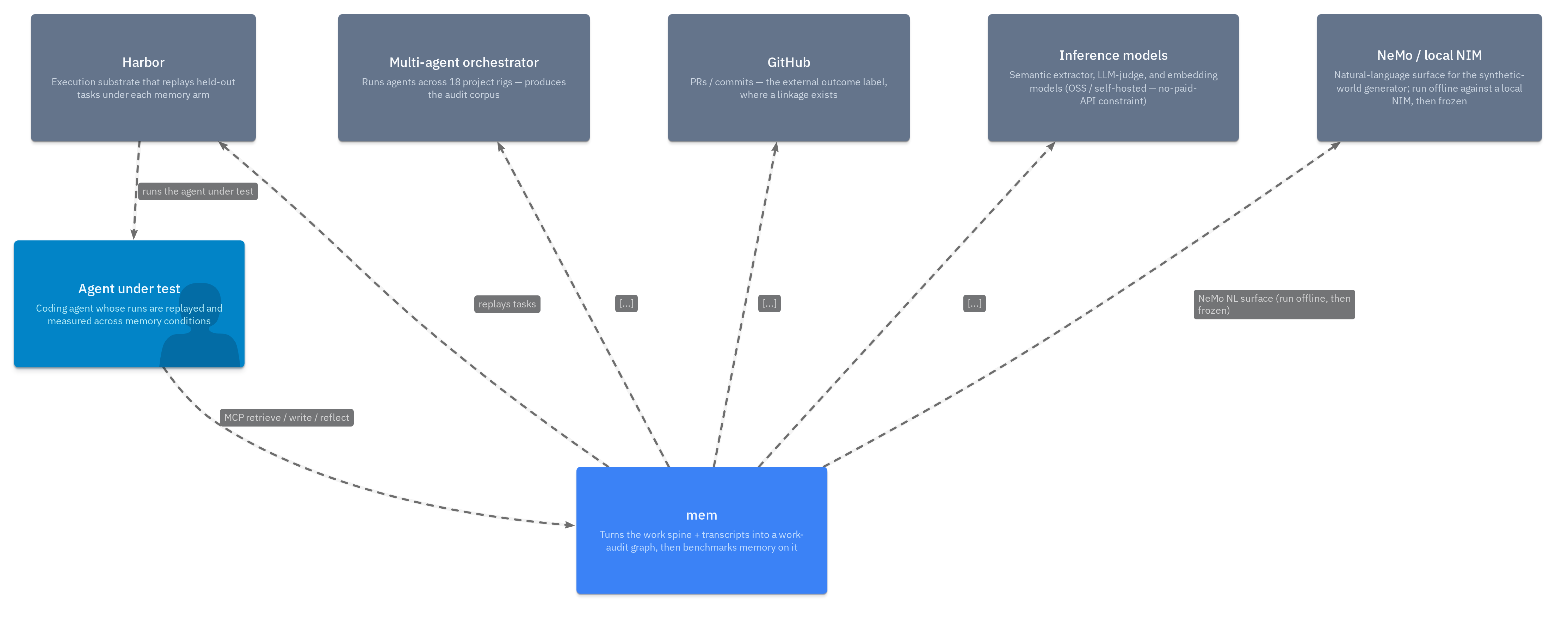
mem — system landscape
index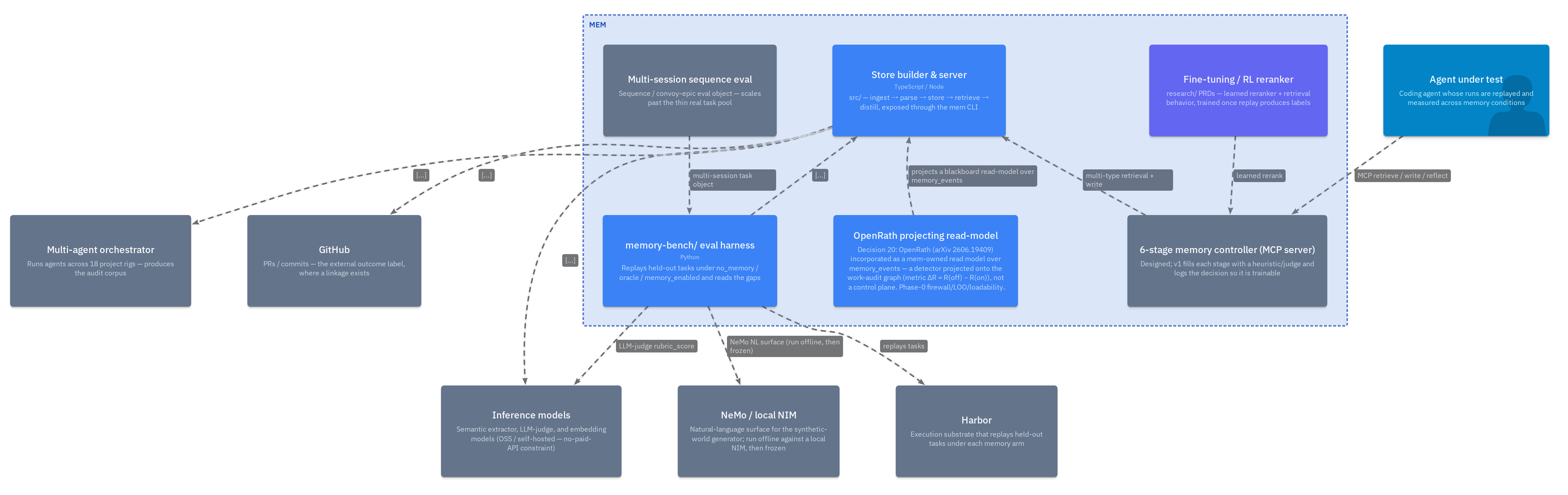
mem — containers (built vs planned)
memSystemTurns the work spine + transcripts into a work-audit graph, then benchmarks memory on it
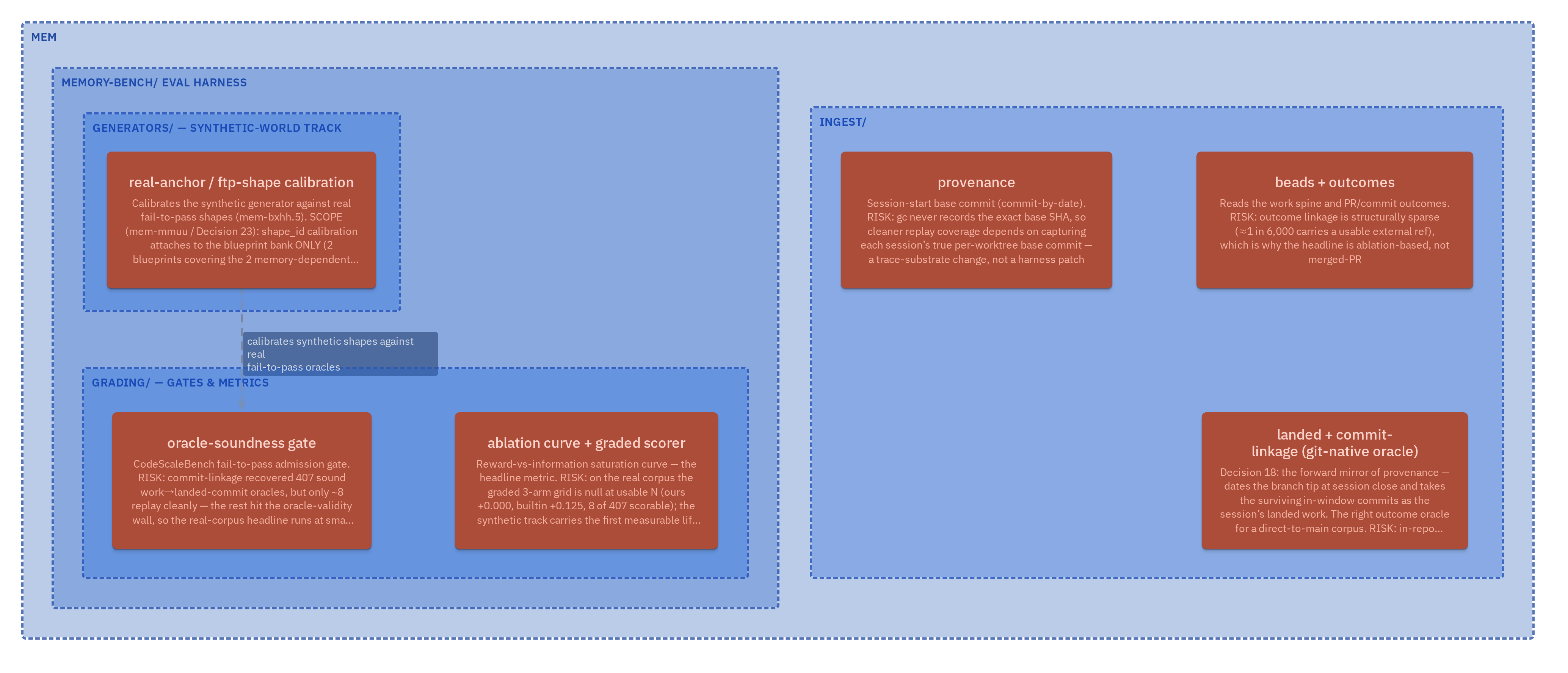
Risks & open questions
risks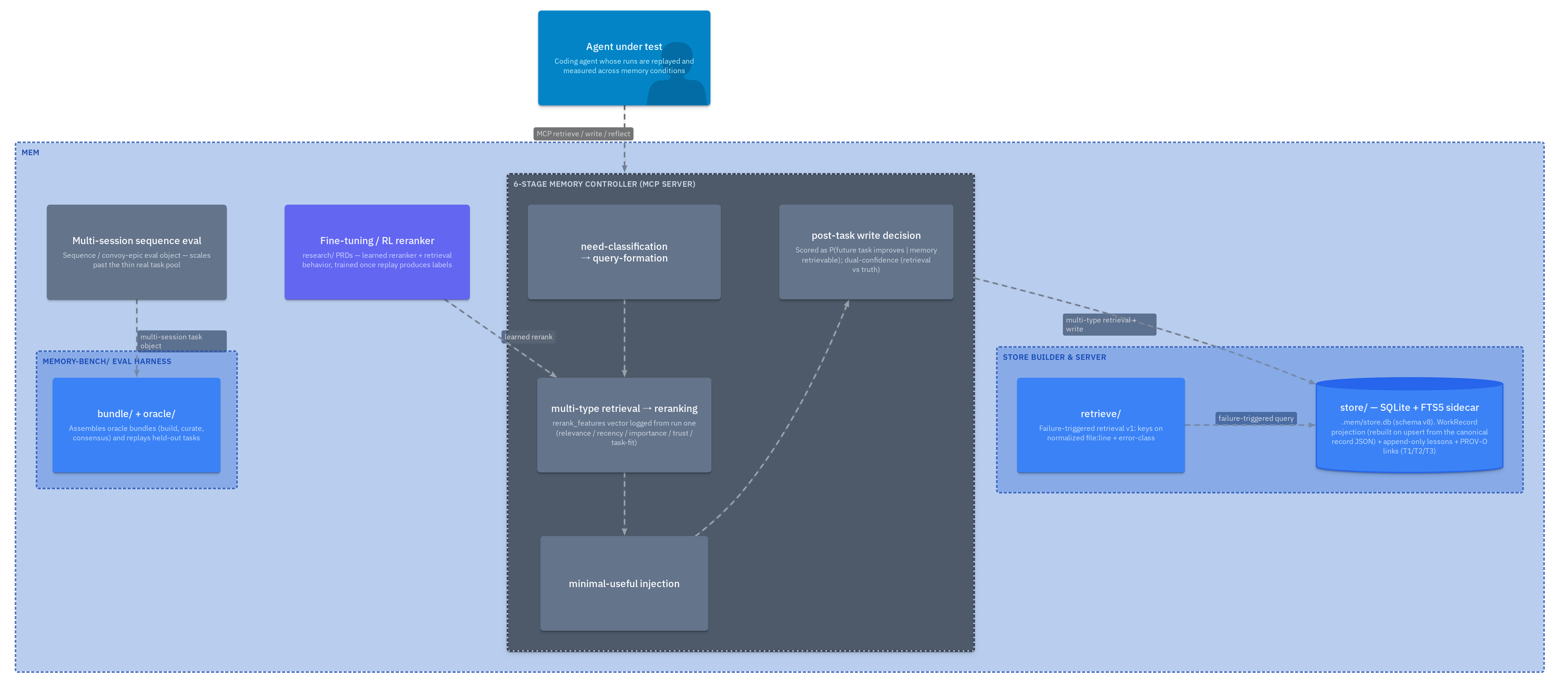
Planned & research work
plannedInside each box
Containers & components
Each part decomposed into the components that implement it. Every box links to its source in the interactive explorer.
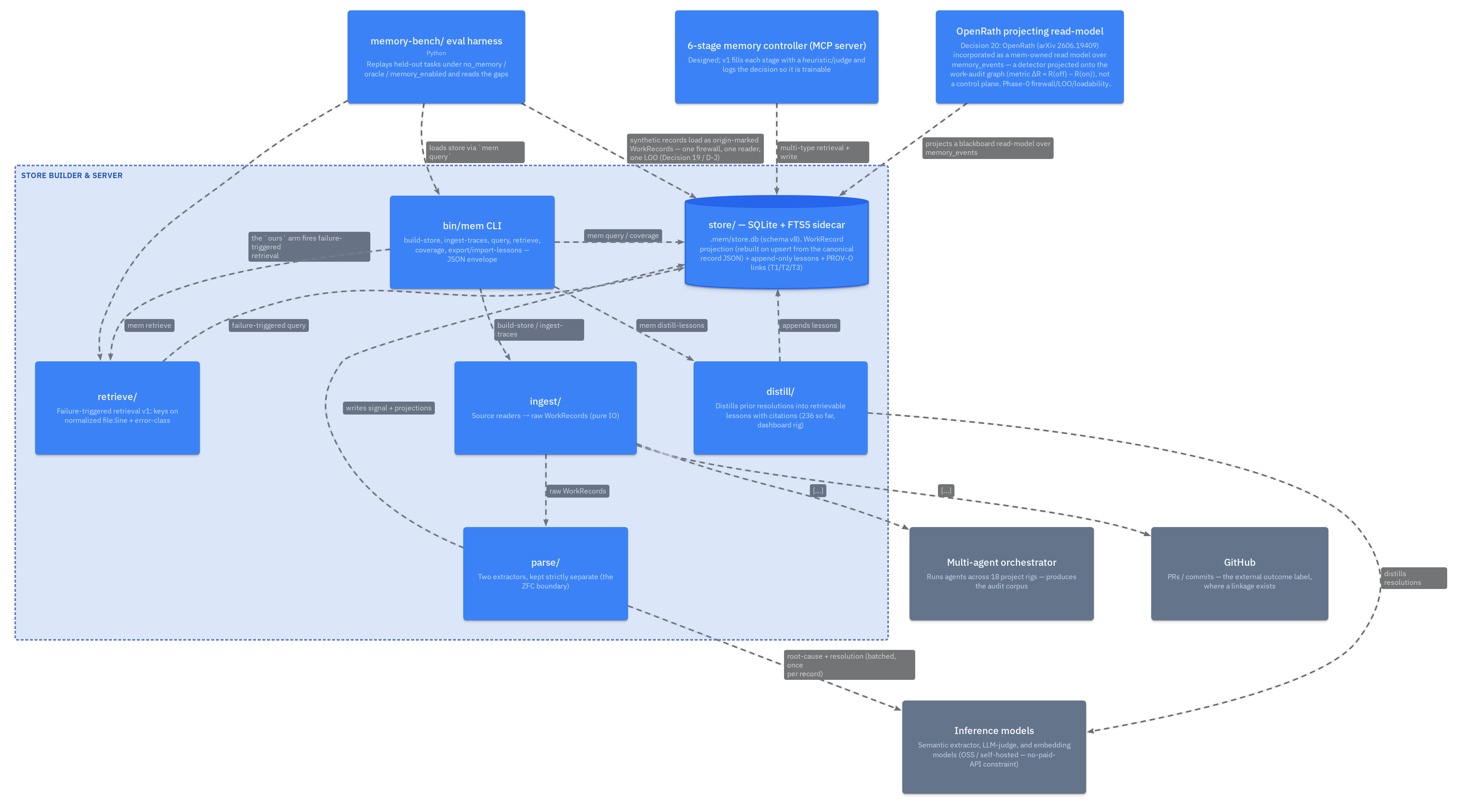
Store builder & server (src/) — components
storeContainersrc/ — ingest → parse → store → retrieve → distill, exposed through the mem CLI
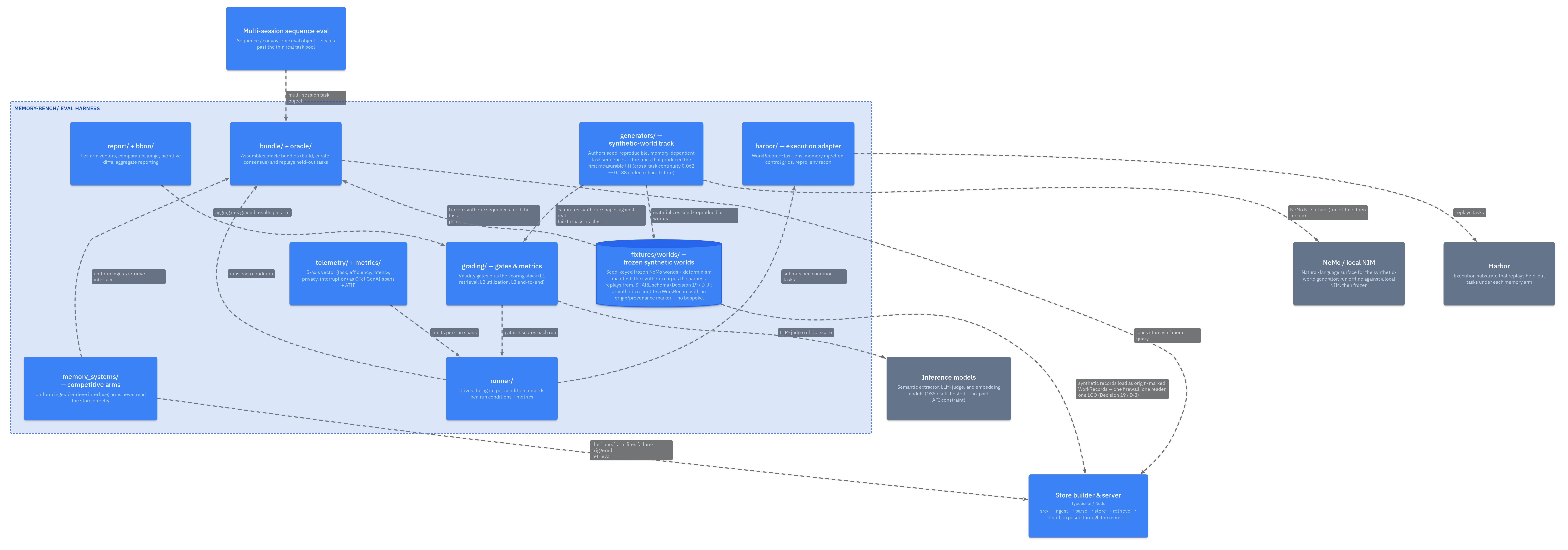
memory-bench/ eval harness — components
benchContainerReplays held-out tasks under no_memory / oracle / memory_enabled and reads the gaps
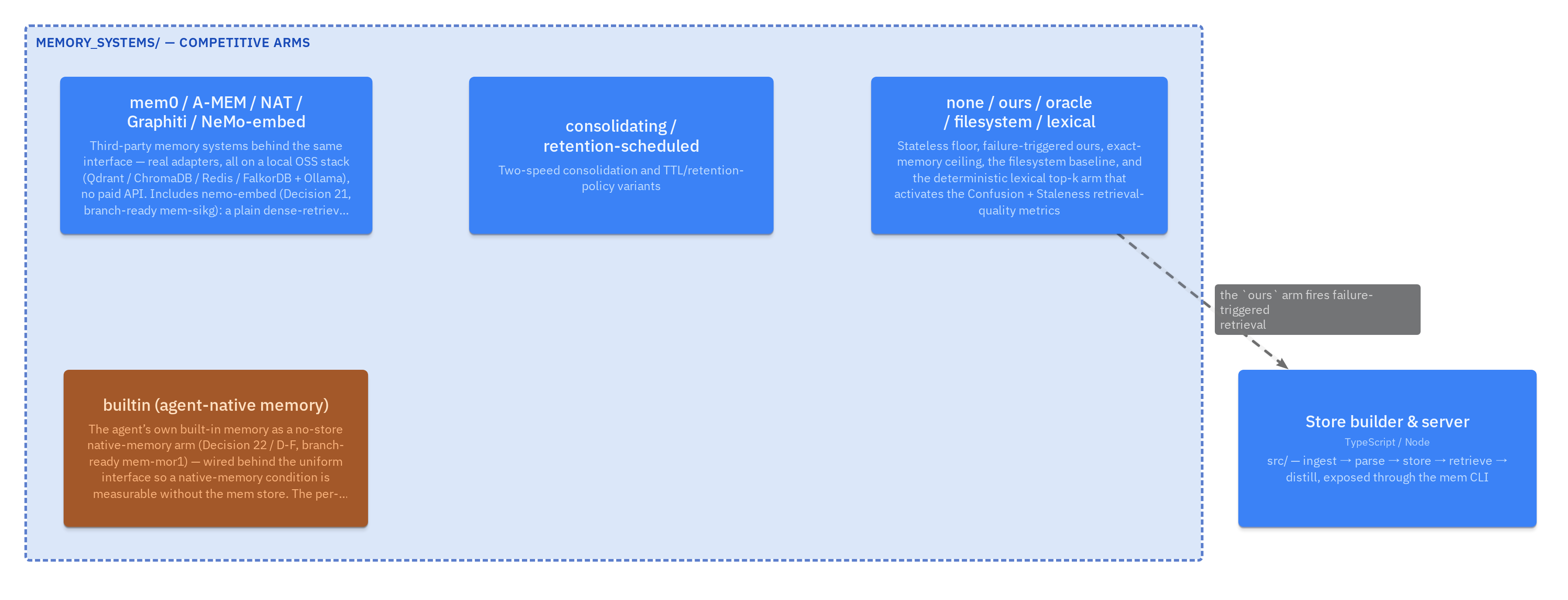
Competitive memory arms
armsViewUniform ingest/retrieve interface; arms never read the store directly
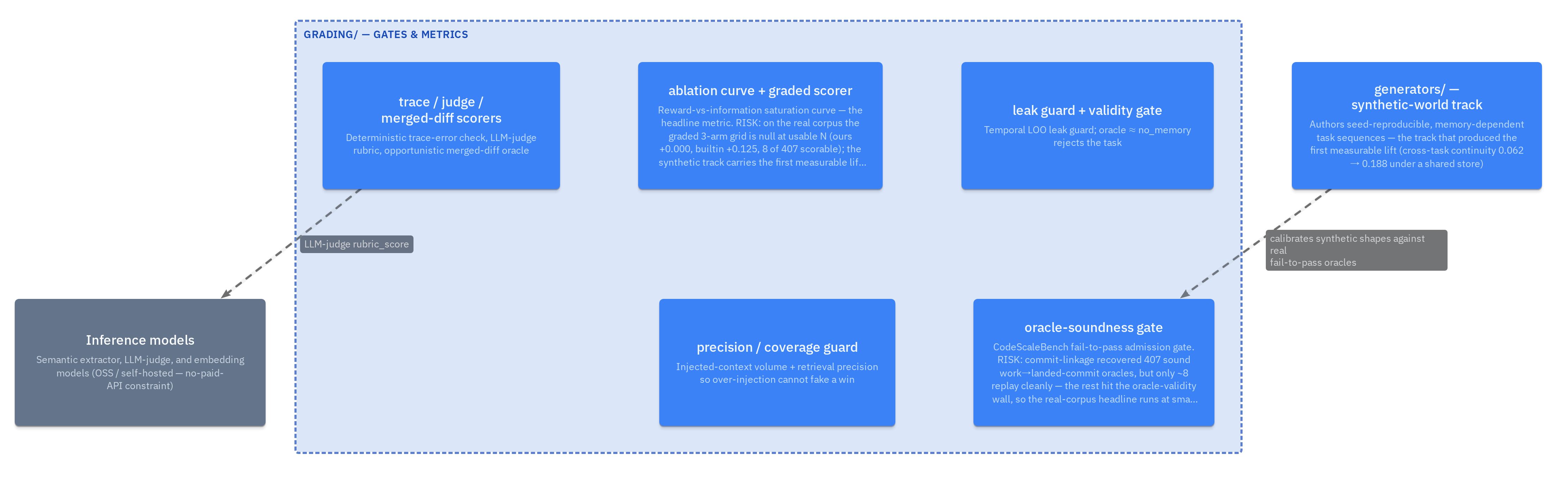
Grading — validity gates & scoring stack
gradingViewValidity gates plus the scoring stack (L1 retrieval, L2 utilization, L3 end-to-end)
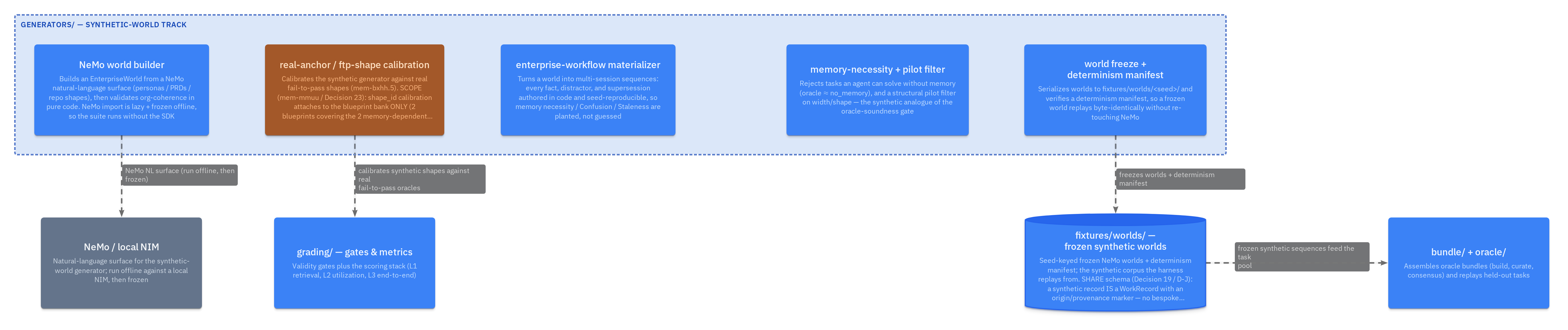
Synthetic-world generation track
generatorsViewAuthors seed-reproducible, memory-dependent task sequences — the track that produced the first measurable lift (cross-task continuity 0.062 → 0.188 under a shared store)
How it runs
Walkthrough flows
Dynamic views — the narrative spine of the system, step by step.
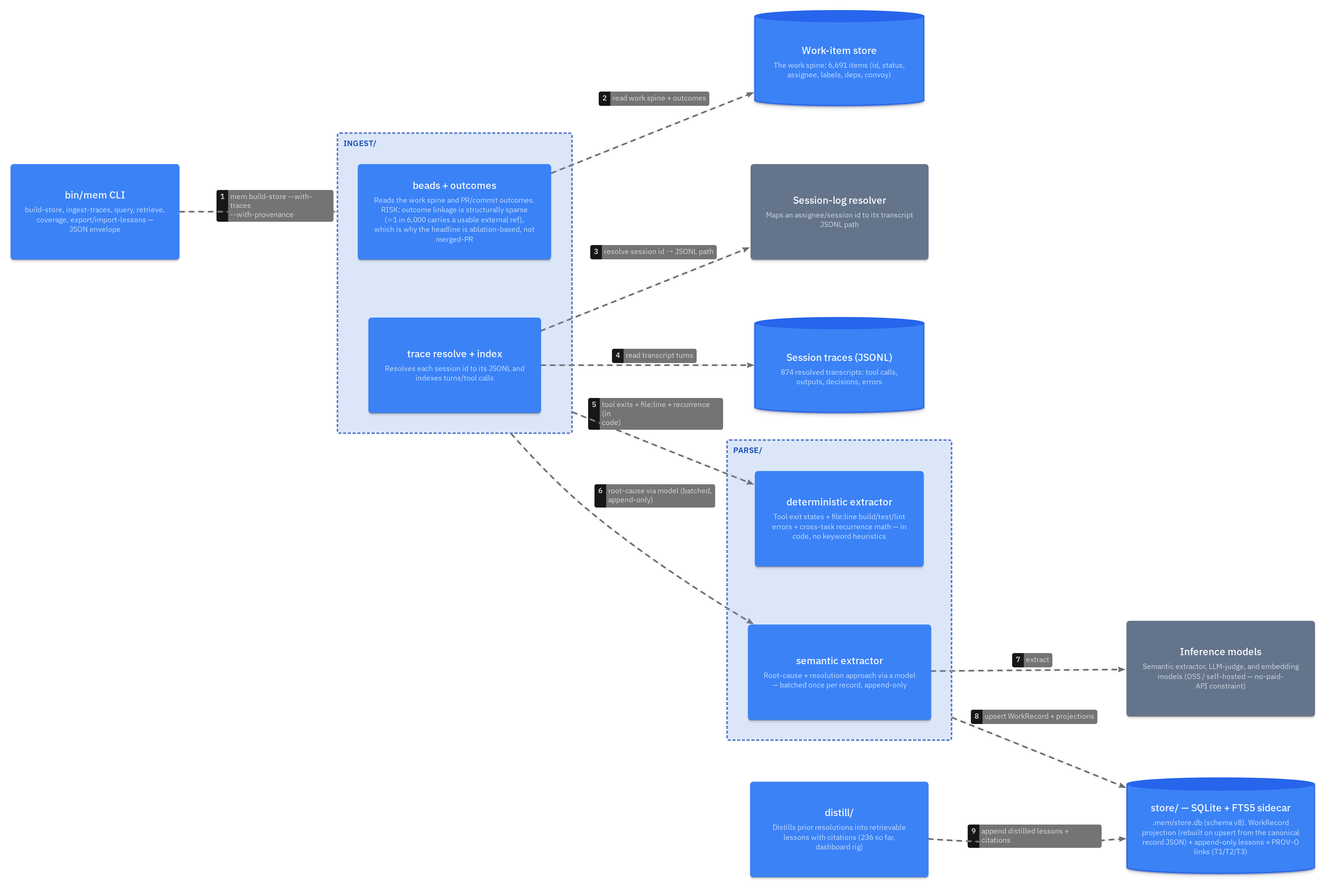
Walkthrough — store build / ingest pipeline
buildStoreRun from the gas-city checkout so `--with-traces` resolves transcripts via city.toml; verify trace/repo/base-commit counts before swapping the store into place.

Walkthrough — synthetic-world materialization
synthBuildThe second corpus: every fact, distractor, and supersession is authored in code and seed-reproducible. NeMo supplies only the natural-language surface, run offline and frozen, so the suite (and the eval) runs without the SDK.
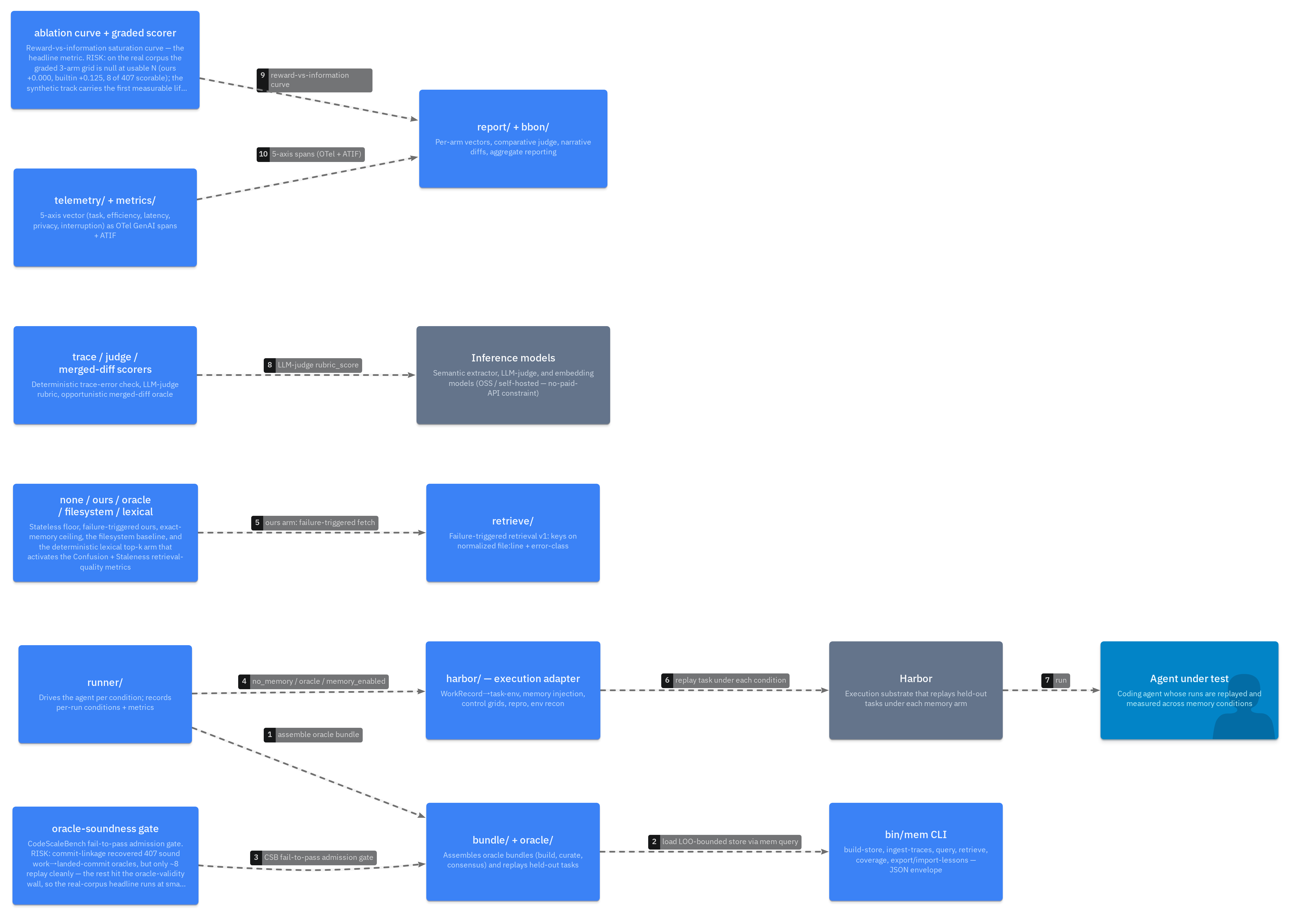
Walkthrough — an eval run end-to-end
evalRunThree conditions per task: no_memory (floor), oracle (ceiling + validity gate, oracle ≈ no_memory rejects the task), memory_enabled (the system under test).
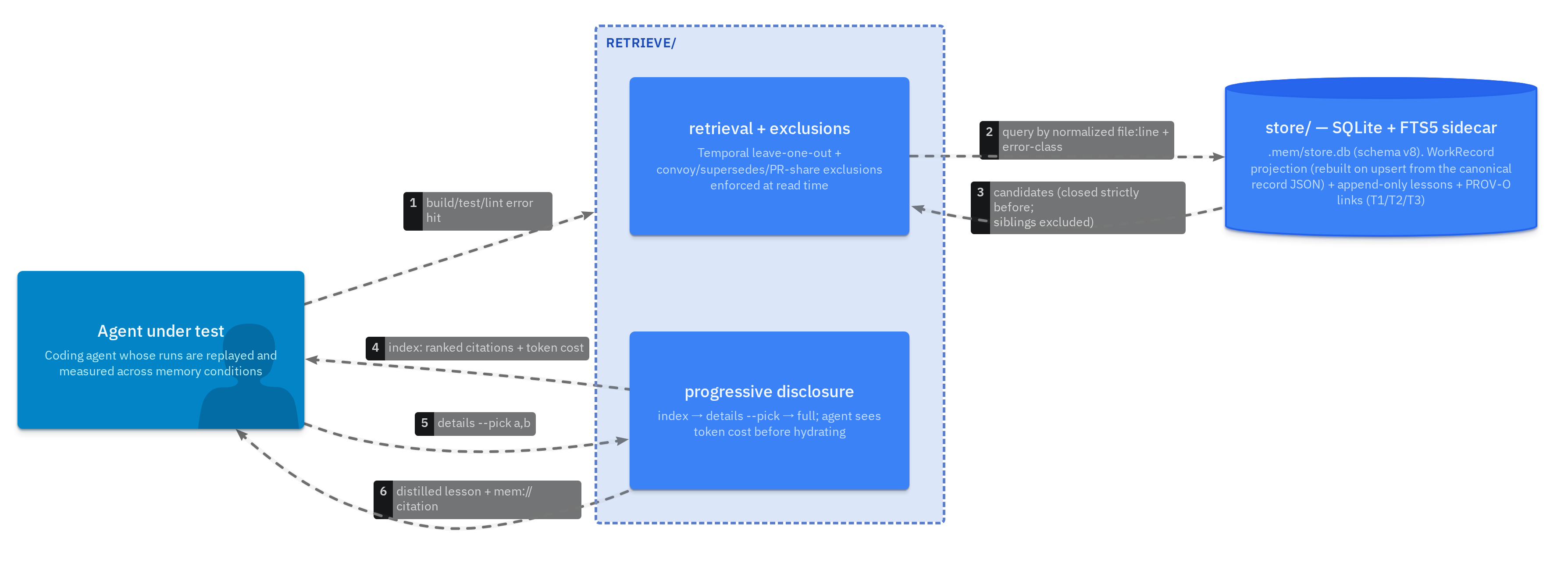
Walkthrough — failure-triggered retrieval at runtime
retrievalFlowRetrieval is deterministic, so the index call and the details call that follows it see the same ranking; the agent, not the pipeline, chooses how many tokens to spend.
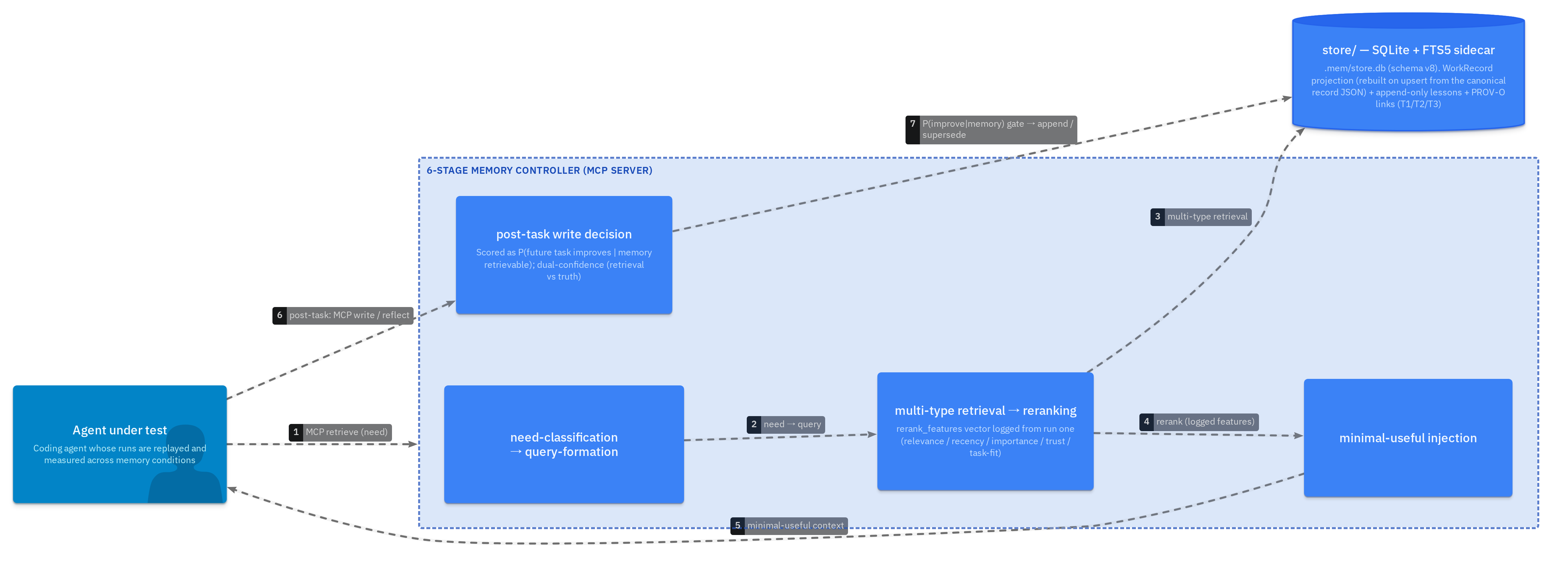
Walkthrough — planned 6-stage controller loop
controllerLoopPLANNED. v1 fills each learnable stage with a heuristic/judge and logs its decision, so the controller is trainable the moment replay produces labels.
Where it runs
Deployment
What runs where, and the process & data boundaries between the pieces.
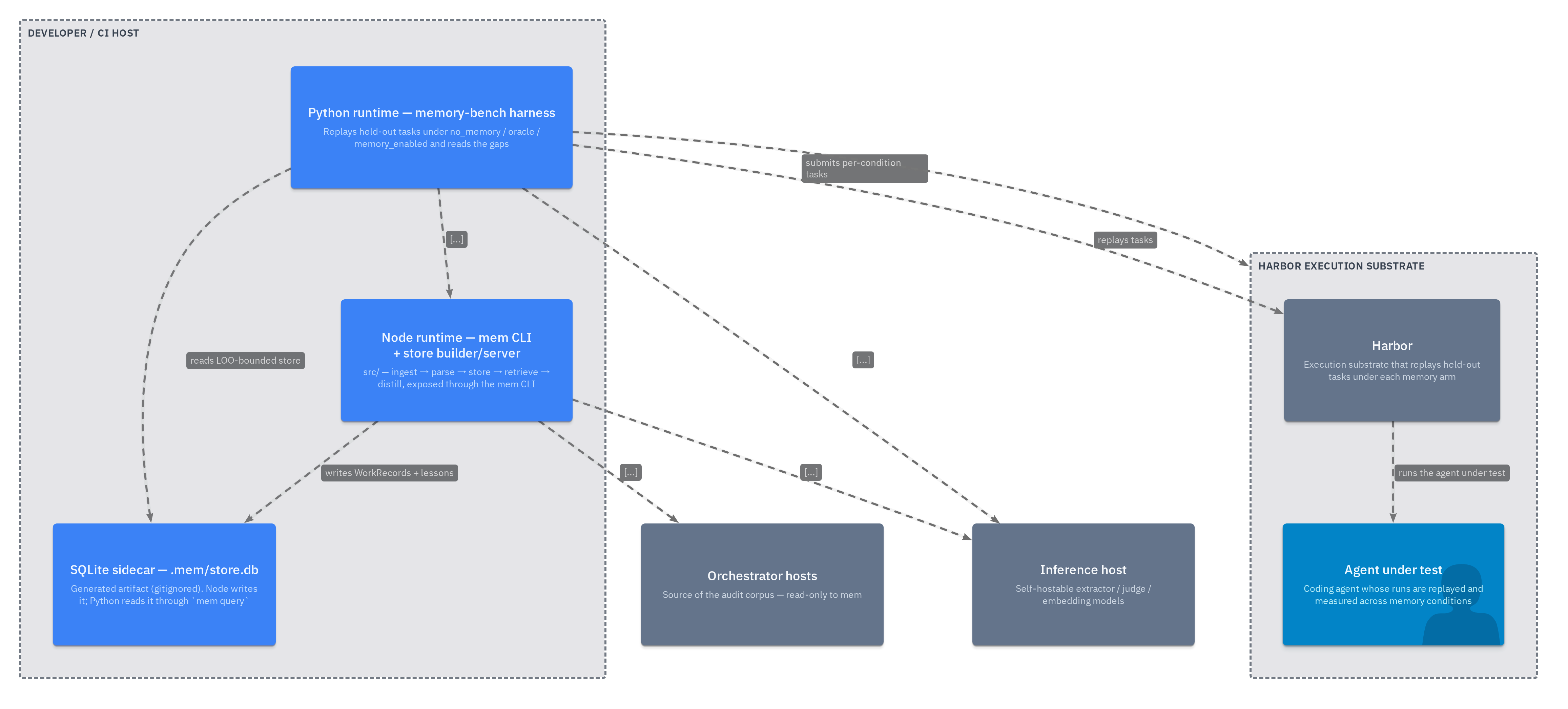
Deployment — where each piece runs
deploymentExplore it live
The figures above are static exports. The interactive explorer lets you pan, zoom, follow relationships, and jump from any box to the source.